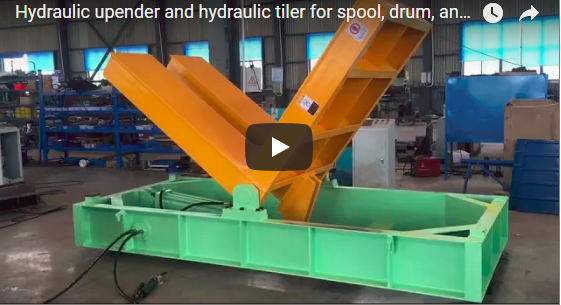
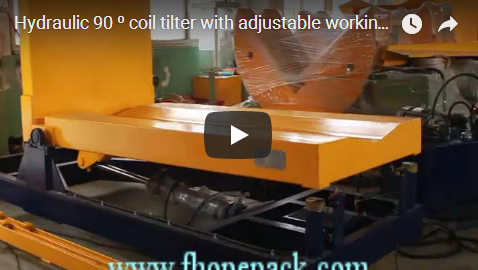
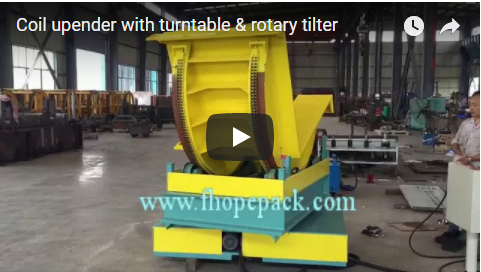
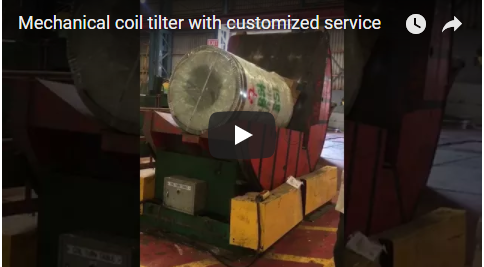
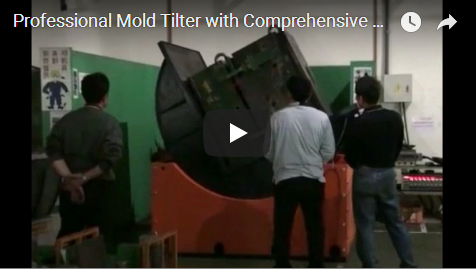
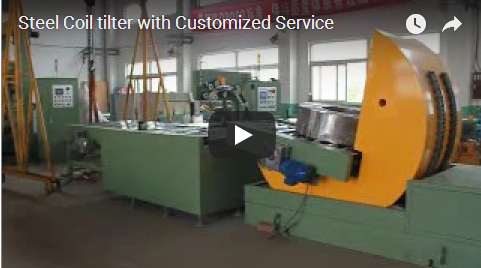
Samenvatting This clip shows our coil tilter with a rotary base in our workshop. The orange V-cradle tilts through 90 degrees to turn a coil from eye-horizontal to eye-vertical or back, and the black base slews the whole tilter through 180 degrees. That way the coil is loaded from one side and leaves facing the next conveyor or the crane, without a second handling move.
Inhoudsopgave
- Wat de video laat zien
- Why add a rotary base
- Cyclus per spoel
- Wat we per plant instellen
- Selectie checklist
- Veiligheid
- Veelgestelde vragen over techniek
- Volgende stap
- Gerelateerd lezen
- Bronnen
Wat de video laat zien
| Stap voor | Wat je ziet |
|---|---|
| Machine | An orange V-cradle tilter with an L-shaped table on a black rotary base |
| kantelen | The cradle tilts through 90 degrees, from V-cradle up to the flat table |
| Zwenken | The base turns the whole tilter round through 180 degrees |
| Retourneren | The cradle tilts back and the base returns to the load side |
| Workshop | Other FHOPE coil machines stand in the background |
Why add a rotary base
- One less move. The coil is tilted and turned in one station, so no crane move is needed to face it the right way.
- Flexible layout. Load and discharge can be on opposite sides of the tilter.
- Fits existing lines. The base points the coil at an existing conveyor or stacker.
- Safer handling. Operators stay outside the cell while the coil turns.
Cyclus per spoel
Uitgewerkt voorbeeld (ter illustratie).
| Item | Waarde |
|---|---|
| Tilt 90 degrees (illustrative) | 40 s |
| Slew 180 degrees (illustrative) | 30 s |
| Load, unload and return moves (illustrative) | 50 s |
| Cycle, 40 + 30 + 50 | 120 s |
| Spoelen per uur, 3,600 ÷ 120 | 30 spoelen |
Wat we per plant instellen
| omgeving | Hangt af van |
|---|---|
| Cradle size | Coil OD, ID and width |
| Hefvermogen | Zwaarste spoel |
| Zwenkhoek | 180 degrees, or set per layout |
| Drive | Hydraulic or electric, per plant |
Selectie checklist
- Coil weight, OD, ID and width.
- Tilt direction: eye-horizontal to eye-vertical or back.
- Slew angle needed.
- Load and discharge sides.
- Spoelen per uur.
- Pit or floor mounting.
Veiligheid
- Fence the cell; keep clear of the slewing base and the cradle.
- Lock out before entering the cell.
- Use PU or rubber pads where the coil surface must not be marked.
- Voor CE-markten is de machine ontworpen volgens ISO 12100 en EN 415-10.
Veelgestelde vragen over techniek
Q: What does the rotary base add? A: It slews the tilter through 180 degrees, so the coil leaves facing the next station.
Q: How far does the cradle tilt? A: Through 90 degrees, turning the coil from eye-horizontal to eye-vertical or back.
Q: How many coils per hour? A: About 30 coils per hour with an illustrative 120 s cycle that includes the return moves; real output depends on coil handling and layout.
Q: Can the slew angle be other than 180 degrees? A: Yes, we set it to suit the layout.
Q: Is the drive hydraulic? A: We supply hydraulic or electric drive, per plant.
V: Welke normen zijn van toepassing? A: Voor CE-markten zijn dat ISO 12100 en EN 415-10.
Volgende stap
We match a coil tilter with rotary base in three steps:
- Dien uw lay-outtekening in. with coil weights and sizes, tilt direction and layout, to info@fhopepack.com.
- Ontvang binnen 48 uur een offerte. met de machinegegevens en de lay-out.
- Plan een locatiebezoek so we confirm the floor and crane layout.
Gerelateerd lezen
- 90-Degree Coil Upender with Rotary Base
- Hydraulic Coil Tilter for 90° Turning
- Coil Upender with Transfer Trolley
- Coil upender and tilter range
Bronnen
- Machine-inhoud: FHOPE-engineeringteam, 2026-10-10
- Klem: de video op YouTube
- Cyclus per spoel: ons uitgewerkte voorbeeld, illustratieve waarden
- Normbereik: ISO 12100:2010; EN 415-10: 2014
- Tijdstip van indiening voorstel: goedgekeurde bouwvergunning (voorstel binnen 48 uur)
Laatst beoordeeld: 10-10-2026