Samenvatting Repositioning a loaded bin by hand is where back injuries and dropped loads begin. An automatic box tilter holds a box, crate or bin on a powered platform and rotates it to a set angle, either to empty the contents or to turn the load for the next station. Load weight, tilt angle and cycle are configured per project.
Inhoudsopgave
- What a box tilter does
- Dumping vs repositioning
- How it tilts
- Kern onderdelen
- Tilting angle by application
- Center of gravity matters
- Typische configuratie
- Wat de video laat zien
- Selectie checklist
- Bediening en veiligheid
- Veelgestelde vragen over techniek
- Volgende stap
- Gerelateerd lezen
- Bronnen en standaarden
What a box tilter does
A box tilter, also called a box dumper or tipper, holds a container on a platform and rotates it under power to a preset angle. The platform carries the load through the turn, so the container stays supported at every point of the rotation.
The same machine repositions a container for the next station or empties it into a hopper or belt.
Dumping vs repositioning
The two jobs set different requirements. Repositioning turns the container to present a face or side, and usually stops at 90 degrees. Dumping carries the container past vertical and holds while the contents discharge, so the angle and the hold time matter more than the exact finish position.
We set the machine’s angle, speed and hold behavior to the actual job.
How it tilts
| Drive | Karakter |
|---|---|
| Hydraulisch | high tilting power, compact force in a strong frame |
| Elektromechanische | precise position control, no fluid system to maintain |
The drive rotates the load platform around a pivot in the frame. A programmable controller runs the cycle, sets the tilt angle and speed, and returns the platform when the job is done.
Kern onderdelen
| Bestanddeel | Rol |
|---|---|
| Laadplatform | holds the box, crate or bin |
| Frame and pivot | support the load and carry the tilt motion |
| Drive | hydraulic or electro-mechanical |
| Controleer: | cycle, angle and speed settings |
| Beveiligen | cradle shaping for stable upright repositioning, active clamping for inverted dumping; selected per project |
Tilting angle by application
- 90 degrees for repositioning a container to the next station.
- 120 to 180 degrees for tipping contents out of a bin.
- A hold function keeps the platform at the angle while contents discharge.
The angle range is confirmed per project from the job and container.
Center of gravity matters
A tilter that clears the load’s weight but not its center of gravity is a tilter that rocks. The platform and drive are sized from the heaviest load and where that load sits, so the machine stays stable through the full arc.
Keep the load positioned as set at start-up; shifting a heavy bin off-center mid-shift changes the balance the drive was sized for.
Typische configuratie
De onderstaande cijfers geven de gebruikelijke uitgangspunten voor deze machineklasse weer en worden per project bevestigd.
| Parameter | Typisch bereik, bevestigd per project. |
|---|---|
| Laad capaciteit | sized to the heaviest container and its filling |
| Hellingsgraad | 90 to 180 degrees per application |
| Platformgrootte | sized to the container footprint |
| Drive | hydraulic or electro-mechanical |
| Controleer: | automated cycle with hold and return |
| Elektrische voeding | 380 V driefase 50 Hz, of 220 V eenfase, afhankelijk van het project en de stroomvoorziening van de installatie. |
Wat de video laat zien
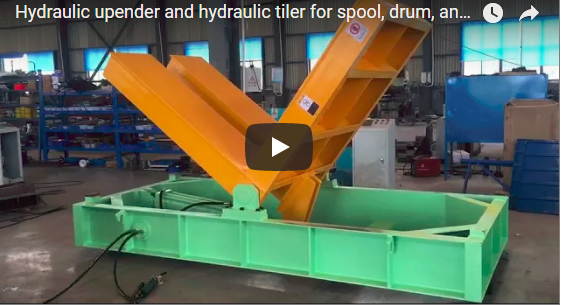
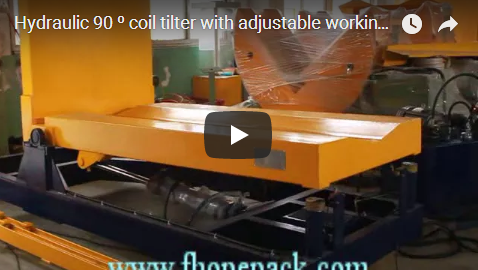
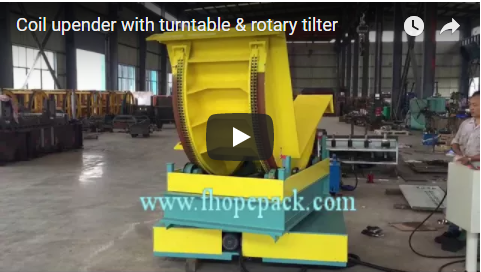
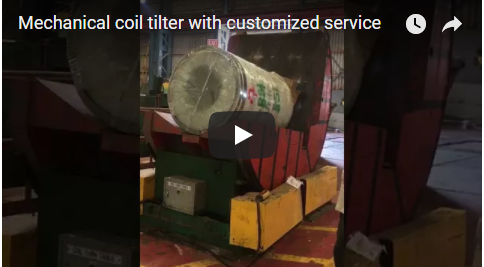
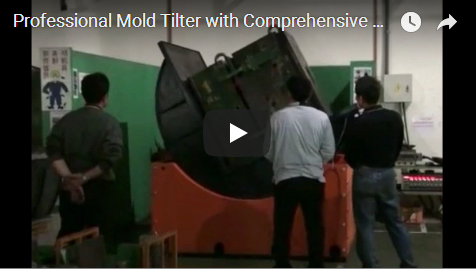
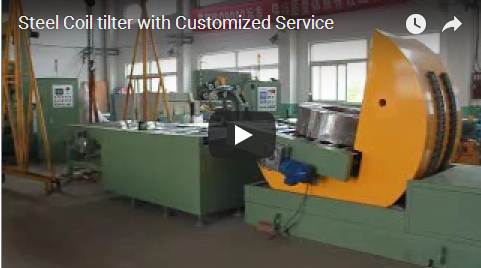
Our footage shows a tilter rotating a loaded container through a tipping cycle in a production setting. It is a general demonstration, so capacity, angle and cycle for your containers are confirmed with us per project.
Selectie checklist
| Vraag | Bevestig per project |
|---|---|
| Heaviest container | nominaal draagvermogen |
| Grootste voetafdruk | platform grootte |
| Soort baan | repositioning or dumping |
| Vereiste hoek | 90, 120, 180 degrees or custom |
| Fiets nodig | cycles per shift and hold time |
| Elektrische voeding | spanning, fase en frequentie op locatie |
Bediening en veiligheid
The controller runs the cycle and lets the operator set angle and speed from the panel. Keep the area clear while the platform moves, keep the load positioned as set at start-up, and stay inside the rated capacity. Emergency stop is fitted at the panel, and inspection covers drive, pivot and the control system, per the machine manual.
Veelgestelde vragen over techniek
Q: Can it both dump and reposition? A: Yes. A multipurpose unit handles both; the angle, speed and hold behavior are set for each job per project.
Q: What tilt angles are available? A: From 90 up to 180 degrees and custom angles, set by whether the container is being repositioned or emptied. Confirmed per project.
Q: Hydraulic or electro-mechanical? A: Hydraulic gives high tilting power; electro-mechanical gives precise control without a fluid system. We select with you per project.
Q: Is the cycle automatic? A: Yes. The controller runs an automated cycle with angle, speed and a hold function, and can integrate with a conveyor line.
Q: What is the capacity range? A: Frames scale to the payload: the platform and drive are sized to your heaviest container and its filling, so the rated range is set per project.
Volgende stap
- Email us at info@fhopepack.com with your container sizes, load weights and job type.
- We send tilt options, drive choices and a layout drawing within 48 hours.
- We arrange a site survey to confirm the tilter fits your line.
Gerelateerd lezen
- Professionele malkantelaar met uitgebreide technische ondersteuning.
- Stalen spoelkantelaar met service op maat
- Spoelkantelaar en spoelomkeerder
- FHOPE verpakkingsmachine productlijnen
Bronnen en standaarden
- ISO 12100:2010 — Veiligheid van machines. Algemene principes voor ontwerp, risicobeoordeling en risicobeperking.
- EN 415-10:2014 — Veiligheid van verpakkingsmachines. Algemene eisen
- EN ISO 13849-1:2023 — Veiligheid van machines. Veiligheidsgerelateerde onderdelen van besturingssystemen
- FHOPE automatic box tilter demonstration video. Reviewed as a general demonstration; capacity, angle and cycle confirmed per project.
Laatst beoordeeld: 10-10-2026