Santrauka
Automated pallet wrapping and cross-strapping combine film wrapping with strap application in one station, so a pallet load is wrapped and reinforced on a single line. The system applies film and cross straps in one station, so a single footprint gives the load both wrapping and strapping reinforcement. Pallet size, film grade and strap pattern are confirmed per project.
Turinys
- Why combine wrap and cross-strap
- Ką sistema veikia
- Rotating platform and overhead beam
- Wrap and cross-strap cycle
- Ką rodo filmuota medžiaga
- Tipinis konfigūracija
- Atrankos kontrolinis sąrašas
- Veikimas ir sauga
- Inžinerijos DUK
- Kitas žingsnis
- Susijęs skaitymas
- Šaltiniai ir standartai
Why combine wrap and cross-strap
A pallet load wrapped only in film stays together but can still shift under repeated handling. Adding cross straps fixes the load vertically, so the wrapped unit keeps its shape in storage and transit.
Doing both steps in one station removes a separate strapping machine from the line and shortens the floor layout. Strap pattern and loop count are confirmed per project.
Ką sistema veikia
The system is a single-station pallet unit: a pallet load sits on a rotating platform, film is applied around the sides, and an overhead beam with a strapping head lowers straps across the load.
When the wrap and strap steps are complete, the film is cut and the unit is ready to move on. Pallet size and film grade are confirmed per project.
Rotating platform and overhead beam
The rotating platform is a circular turntable that carries the pallet and load through the wrap cycle. An overhead beam above the platform holds the film feed and the strapping head and moves across the load as required.
The frame stands on two side columns with guide rails and a cable carrier for the moving head. Platform size and beam travel are confirmed per project.
Wrap and cross-strap cycle
The cycle starts with the load turning while stretch film is applied around the sides. The overhead beam then moves across the load and lowers straps onto the surface to fix it.
The straps are tightened, the beam returns to its home position, and the film is cut to finish the cycle. Film turns and strap tension are confirmed per project.
Ką rodo filmuota medžiaga
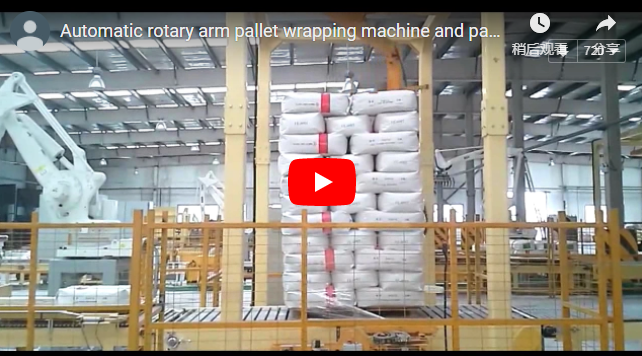
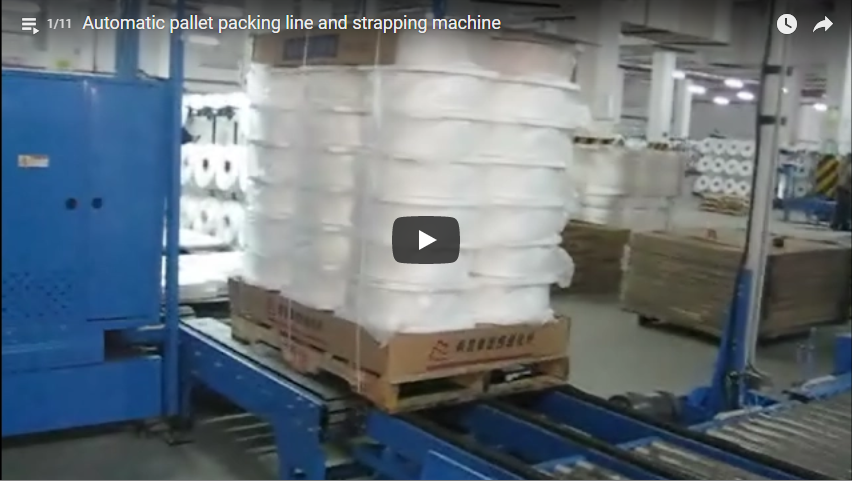
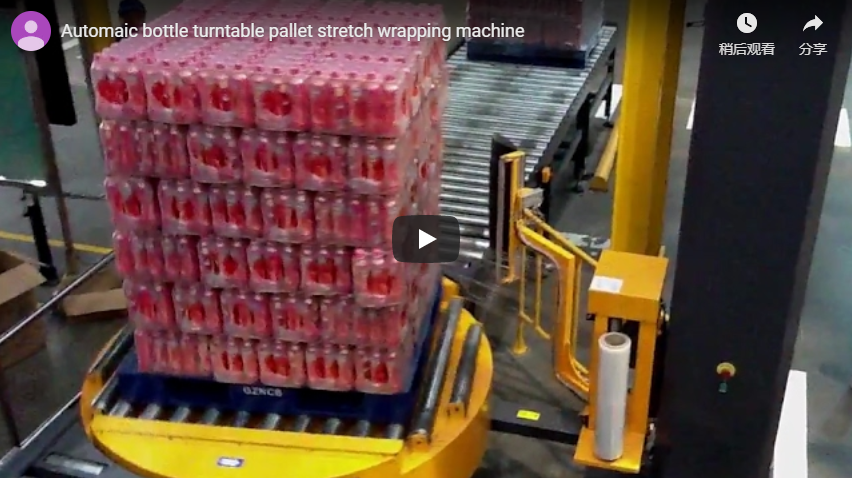
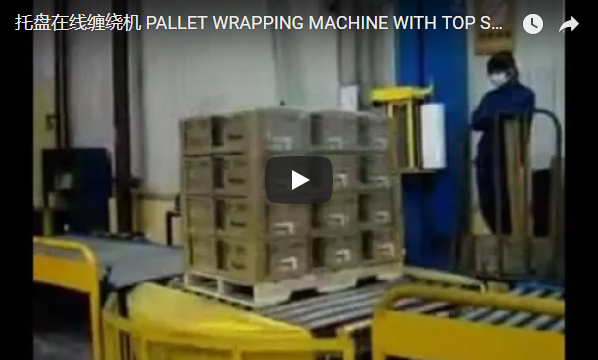
Our footage shows an automated pallet wrapping and cross-strapping system running a single cycle. A stacked load on a pallet turns on the rotating platform. Stretch film wraps the sides, an overhead beam moves across and lowers straps over the load, and the film is cut as the cycle finishes. It is a general demonstration, so your pallet size, film grade and strap pattern are confirmed with us per project.
Tipinis konfigūracija
Žemiau pateiktuose paveikslėliuose pateikiamos funkcinės projektavimo ribos, o ne skaitinės vertės, ir jos patvirtinamos kiekvienam projektui.
| Parametras | Tipinis diapazonas, patvirtintas kiekvienam projektui |
|---|---|
| Ruošinys | stacked carton or box load on a pallet |
| Platforma | circular turntable that rotates the load for wrapping |
| Wrap | transparent stretch film applied around the sides |
| Cross-strap | straps lowered by the overhead beam and tightened |
| Sija | overhead unit with film feed and strapping head |
| apdaila | film cut at the end of the cycle |
| Kontrolė | system control with cycle settings; panel layout per project |
| Elektros tiekimas | 380 V trifazis 50 Hz arba 220 V vienfazis lengvosioms mašinoms, parenkamas kiekvienam projektui |
Atrankos kontrolinis sąrašas
| klausimas | Patvirtinti kiekvienam projektui |
|---|---|
| Padėklų asortimentas | footprint, stacked height and load weight |
| Filmas | width, thickness and wrap turns required |
| Dirželiai | number of straps, cross pattern and tension |
| ciklas | wrap, strap and film-cut sequence timing |
| maketavimas | single-station footprint and takeaway path |
| Elektros tiekimas | įtampa, fazė ir dažnis vietoje |
Veikimas ir sauga
Place the pallet load on the rotating platform, start the cycle, and let the system wrap, strap and cut the film automatically. Confirm the load is seated and centered before each cycle.
Keep clear of the platform and the overhead beam while the machine runs, and check the beam guides, strapping head and film feed per the machine manual.
Inžinerijos DUK
Q: How is the load stabilized by wrap and cross straps together? A: The film holds the load together and an overhead beam tensions cross straps over the top, so the pallet unit is reinforced in one station; strap pattern and loop count are confirmed per project.
Q: Why combine wrapping and strapping? A: Film holds the load together and straps fix it vertically, and doing both in one station saves floor space and a separate machine.
Q: How is the load wrapped? A: The load turns on a rotating platform while transparent film is applied around the sides.
Q: How are the cross straps applied? A: An overhead beam moves across the load and lowers straps onto the surface, where they are tightened.
Q: What electrical supply does it need? A: The system runs on 380 V three phase 50 Hz as standard, and light machines can be arranged for 220 V single phase, selected per project.
Kitas žingsnis
- Email us at info@fhopepack.com with your pallet footprint and stacked height.
- We send an automated pallet wrapping and cross-strapping proposal within 48 hours.
- We confirm the film grade, strap pattern and cycle time for your station.
Susijęs skaitymas
- Automatizuota padėklų apvyniojimo, kryžminio apvyniojimo ir konvejerių sistema
- M tipo padėklų vyniojimo mašina, skirta krauti padėklų domkratu
- Fully automatic pallet wrapping machinery line: cycle time, load size and film per shift
- FHOPE pakavimo mašinų produktų linijos
Šaltiniai ir standartai
- ISO 12100:2010 Mašinų sauga, bendrieji projektavimo principai ir rizikos vertinimas
- EN 415-10:2014 Pakavimo mašinų sauga, bendrieji reikalavimai
- EN ISO 13849-1:2023 Mašinų sauga, su sauga susijusios valdymo sistemų dalys
FHOPE automated pallet wrapping and cross-strapping system demonstration video. Reviewed as a general demonstration; pallet size, film grade and strap pattern confirmed per project.
Paskutinį kartą peržiūrėta: 2026-10-12