Effectus summary
Rectangular block products, from furniture components to foam and mattress panels, are hard to wrap by hand, and the film comes out different from one operator to the next. This line runs those products through a fixed sequence: infeed by roller conveyor, film application, a press and shrink station, and a heated shrink tunnel before output. We build automatic shrink packaging lines for block products. Product range and film plan are confirmed per project.
Table of Contents
- Why block products are hard to pack
- Quomodo linea currit
- Infeed by roller conveyor
- Applying the film
- Press and shrink station
- Heated shrink tunnel
- Configuratio typica
- Quod video ostendit
- Index selectionis
- Operatio salutis
- Quaestiones Frequentes de Ingeniaria
- tunc step
- Related reading
- Fontes et normae
Why block products are hard to pack
Furniture components, foam blocks, mattress panels and similar rectangular products are bulky, soft-edged and every one a different size. Manual shrink wrapping is slow, the film application is inconsistent, and the finished pack varies from one operator to the next. A block that is not wrapped tightly travels loose and arrives scuffed. The line is built to remove that variability, wrapping each block through the same sequence so the package looks and holds the same every time.
Quomodo linea currit
A product enters on a roller conveyor, keeps moving through the stations and leaves with film tightened closely around every face, without an operator touching it during the main sequence. The line has specific stations in order: infeed, film application, press and shrink, and the heated tunnel. Because the stations are fixed, the package is repeatable rather than operator-built. The sequence is confirmed per project on the real block range.
Infeed by roller conveyor
Products are fed into the line on a roller conveyor, moving each block to the film application point in flow. The conveyor carries the block without lifting, so heavy panels and foam blocks move into the line the same as light ones. Roller infeed is also the timing point, letting the film station work from the block that is actually arriving. Conveyor width and load follow the block range, confirmed per project.
Applying the film
The film is applied around the block at the film station, laid so the covering reaches the faces that need it. Application is automatic and even, which is the fix for the inconsistent hand wrap that block products usually get. The film plan follows the block dimensions and how the block travels, confirmed per project. Even application is what the press and shrink steps build on, because the film can only tighten around what is already there.
Press and shrink station
A press and shrink station comes next, pressing the film onto the product and beginning the shrink. The press element brings the film down against the faces, closing it around the block before the tunnel does the main shrink. Pressing and shrinking together get the film contacting the surfaces early, which is what leaves a taught package rather than a baggy one. The press stroke and force follow the block size, confirmed per project.
Heated shrink tunnel
The block then passes through a heated shrink tunnel, where the film tightens against every face in the heat. The tunnel is what pulls the film flush on corners and edges, the point where loose hand wrapping shows up. Tunnel temperature and time follow the film and the block, confirmed per project, so the film shrinks fully without over-shrinking on soft products. The block leaves the tunnel with the film held close.
A finished block is stable and ready for stacking or shipping,
and because every block runs the same sequence, the package looks and holds the same each time. The output feeds the next station in flow, confirmed per project.
Configuratio typica
Figurae infra limites designationis functionalis potius quam valores numericos enumerant, et per proiectum confirmantur.
| Parameter | Ambitus typicus, per proiectum confirmatus |
|---|---|
| Clausus | rectangular products |
| Film | consilium pelliculae contrahendae |
| Stations | infeed, film, press, tunnel |
| cuniculum | temperatura, commoratio |
| Outfeed | flow connection |
| electrica copia | Triphasis 380 V 50 Hz, vel monophasis 220 V pro machinis lucis, pro singulis proiectis selecta. |
Quod video ostendit
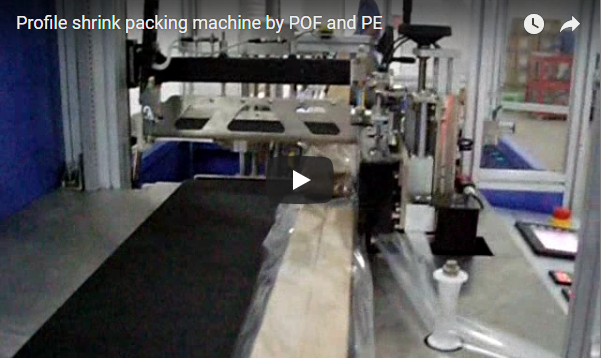
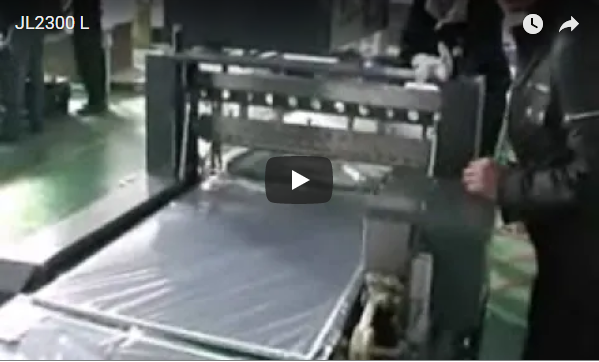
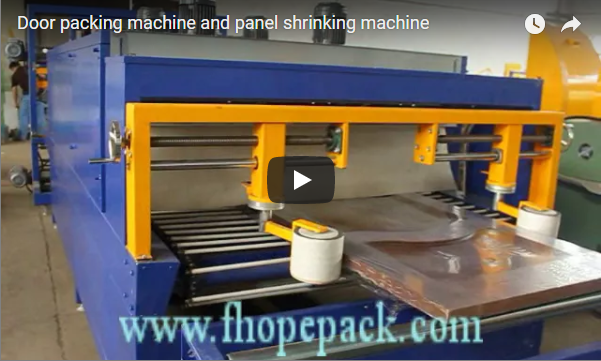
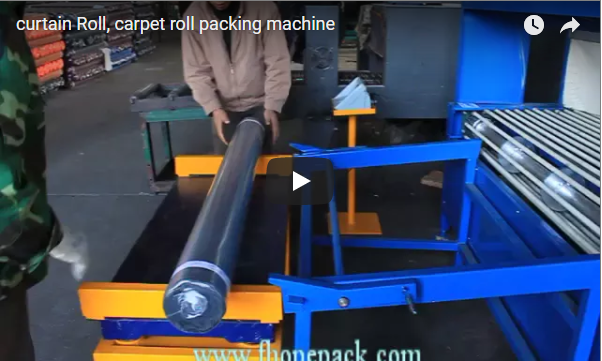
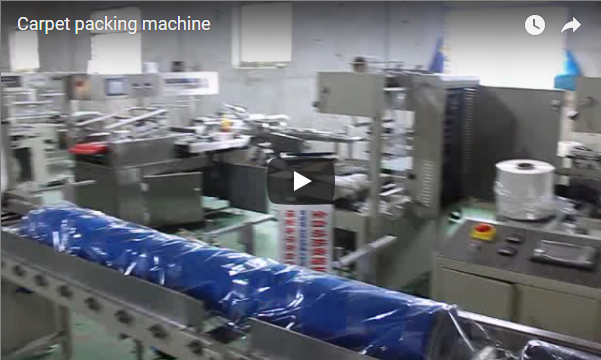
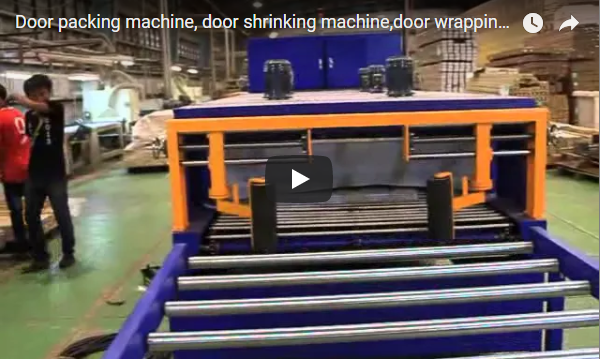
Our footage shows an automatic shrink packaging line handling rectangular block products through infeed, film application, press and shrink, and the shrink tunnel. It is a general demonstration, so your block range and film plan are confirmed with us per project.
Index selectionis
| Quaestio | Confirma per proiectum |
|---|---|
| Block range | magnitudines et pondera |
| Film | consilium pelliculae contrahendae |
| Stations | sequence fit |
| cuniculum | temperatus occasum |
| Outfeed | statio proxima |
| electrica copia | tensio, phasis et frequentia in situ |
Operatio salutis
Run the line from the panel and each block is fed, wrapped, pressed, shrunk and delivered automatically. Keep clear of the infeed, film station, press and shrink area and tunnel while the line runs, with guarding and emergency stops at the operator position. Routine checks cover the conveyor, film feed, press element, tunnel and sensors, per the machine manual. Confirm the recipe against the block before each run so wrapping stays even.
Quaestiones Frequentes de Ingeniaria
Q: What does this line pack? A: Rectangular block products such as furniture components, foam blocks and mattress panels.
Q: What happens at each station? A: Infeed, film application, press and shrink, then a heated shrink tunnel before output.
Q: Why is there a press step? A: Pressing brings the film against the block early, so the package comes out taught rather than baggy.
Q: What does the tunnel do? A: The heated tunnel shrinks the film tight against every face, including corners and edges.
Q: Is the package repeatable? A: Yes, every block runs the same sequence, so the package looks and holds the same each time.
tunc step
- Email us at info@fhopepack.com with your block range, films and volumes.
- Propositionem involucri contractibilis et delineationem dispositionis intra horas quadraginta octo mittimus.
- We arrange a site survey to confirm block range and plant layout.
Related reading
- Machina automatica pelliculae obsignandae in tabula et ianua
- Machina automatica ad laminas contrahendas involvendas
- Lorem panel apparatus horreat sarcina
- Lineae productorum machinarum involucri FHOPE
Fontes et normae
- ISO 12100:2010 Securitas machinarum, principia generalia designandi et aestimandi pericula.
- EN 415-10:2014 Securitas machinarum involucrorum, requisita generalia
- EN ISO 13849-1:2023 Securitas machinarum, partes ad salutem pertinentes systematum moderandi
FHOPE automatic backpacking and shrinking line demonstration video. Reviewed as a general demonstration; block range confirmed per project.
Ultima recensio: 2026-10-10