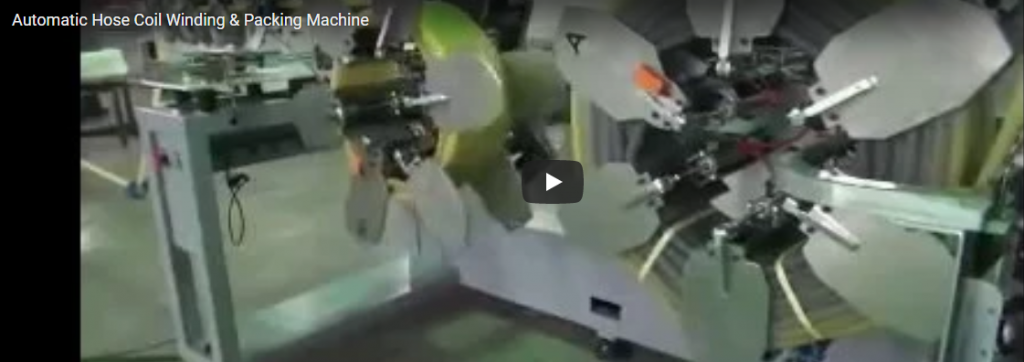
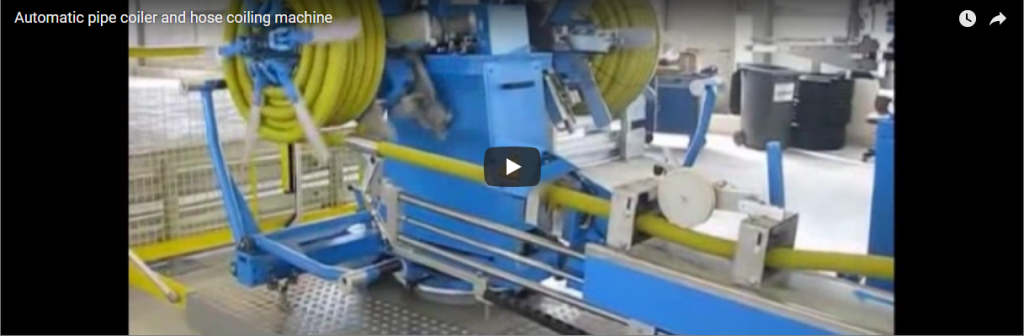
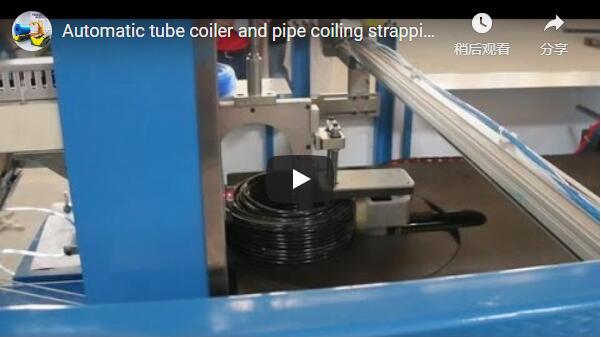
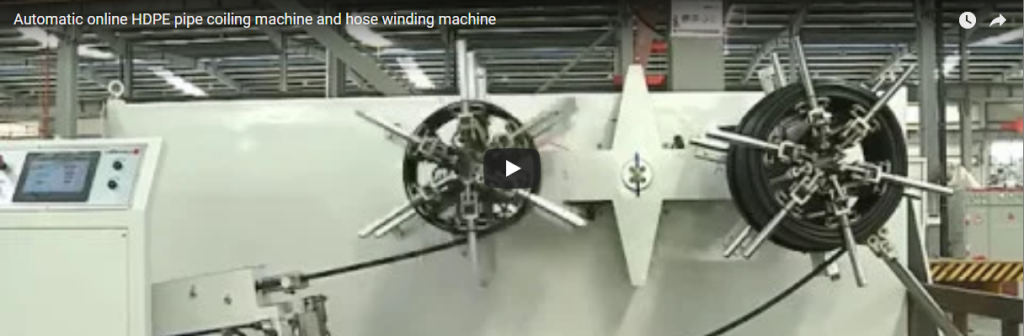
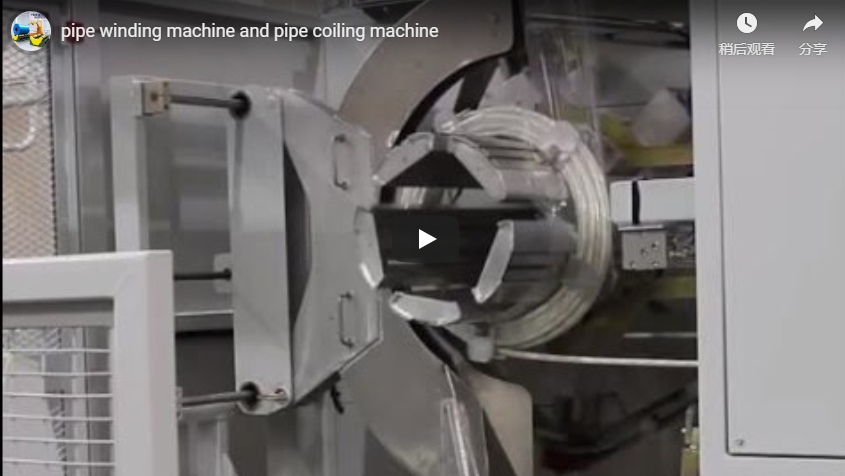
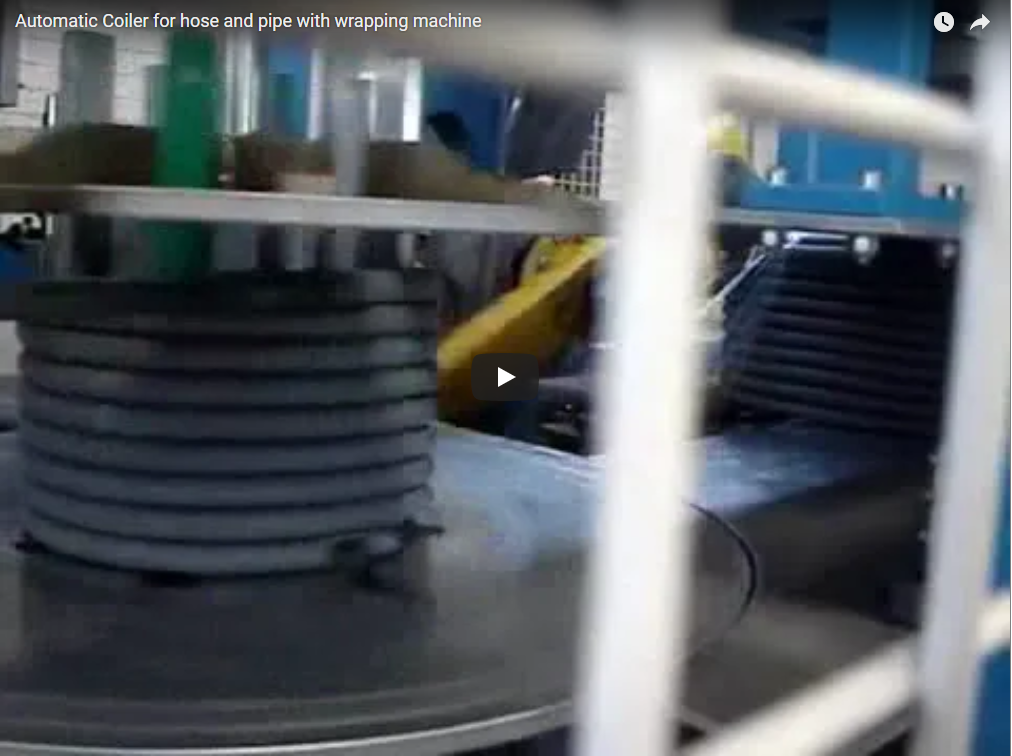
내용 요약 : This page is for anyone buying an automatic pipe or hose coiler and wrapping line, or upgrading one that packs wound coils today. It explains what the machine does, why winding tension and wrapping decide whether your coils stay round and clean, and what to check with a supplier before you commit. The video below shows one working line; the photos on this page are product-library reference images, not stills from the clip.
이 페이지에서 : 이 페이지는 무엇을 결정하는 데 도움이 될까요? · What a pipe and hose coiler and wrapper does · Coiling tension and coil shape · Wrapping and coil handling · 구매 전 확인해야 할 사항 · 영상이 보여주는 것 · 구매자 검증 체크리스트 · FAQ · 관련 독서 · 다음 단계
이 페이지는 무엇을 결정하는 데 도움이 될까요?
A coil of pipe or hose has to arrive round, clean and easy to ship. How it was wound, how it was wrapped and how it was handled decide that result long before the box is sealed. This page turns those steps into questions you can ask a supplier, and a real line in the video below shows what the equipment looks like.
If a line only wraps coils that arrive ready-made, the job is different from one that also forms the coil from a straight length. The section on the machine’s job separates the two, and the “what the video shows” section states openly which of the two this clip demonstrates. The checklist at the bottom gives you a set of questions you can send as they stand.
What a pipe and hose coiler and wrapper does
A pipe and hose coiler takes a long, straight, flexible product and turns it into a compact round coil. Coiling makes the product easier to handle, stack and ship than an open length would be. When the machine forms the coil itself, it usually measures the length, cuts the hose or pipe at a set figure, and then winds the piece onto a mandrel.
The wrapper then puts stretch film around the coil body. The film holds the outer wraps down, keeps the coil round, and gives the product a clean surface for the next steps. A finishing line can also lower the wrapped coil into a carton and seal the box, which turns the station into a ready-to-ship line.
Read them together and the two jobs protect three things:
- 모양. Coiling with even tension keeps the wall tight and the face flat.
- 표면. Film takes the scuffs that would otherwise reach the product.
- 여행. A supported transfer and a sealed carton carry the coil to dispatch.
Coiling tension and coil shape: why a coil holds
The coil is only as good as the winding that made it. If tension is even and the layers lie consistently, the coil stays round and the wall stays tight. If one edge runs longer than the other, the layers slide sideways and the face goes stepped, a defect often called telescoping.
Layer slip is mostly a one-way problem. Once the wraps have moved, wrapping or strapping cannot push them back. The fix is decided at winding: even tension, correct layering and enough radial support while the coil is handled.
Wound coils of hose and pipe carry their own weight on the bottom wrap, so how the coil is supported between stations matters as much as how it was wound. Ask how the machine transfers the coil and where the coil bears its own weight while it moves.
Wrapping and coil handling: film, carton, seal
Film wrapping does two quiet jobs. It presses the outer wraps against the coil so the shape is held, and it gives the product a surface that can take handling. A coil without film is a coil that any roller, guide or hand can mark.
After wrapping, the coil is transferred, boxed and sealed. Each of those moves is a chance to deform or scratch the product, so the transfer is usually automated and the coil is supported while it travels. End-to-end automation removes the variable that manual handling introduces.
The stations you will see in the clip:
- Wrap station. The coil is turned while film is applied round the body.
- 이전. The robot arm moves the wrapped coil without the product hitting the structure.
- Carton and seal. The coil is lowered into a box and the case sealer closes it.
구매 전 확인해야 할 사항
The clip on this page shows wrapping and cartoning of pre-formed coils, so the questions below are written for that reality. If you need the line to coil from a straight length as well, say so explicitly, because that station is not shown here.
- Input form. Confirm whether the line coils from a straight length with measuring and cutting, or accepts pre-formed coils only.
- 봉투. Coil outer diameter, inner diameter, width and weight range against your product.
- Film and wrap. Type, width, number of layers, and whether film goes on before or after any strapping.
- 처리량 Coils or cartons per hour at your coil and carton size.
- Carton range. The box sizes the line can fill and the sealer can close.
- Integration and safety. Hookups to existing conveyors, guarding, emergency stops and certification papers.
영상이 보여주는 것
What the video shows is a coil finishing line built around four moves. A coil sits on a rotating platform, with a metal hold-down plate above it. A robot arm lifts and carries the coil, a wrapping station applies clear film, and an automatic case sealer sits at the end of the conveyor. The line runs the wrap-to-carton-to-seal cycle by itself, and one worker stands beside the conveyor supervising the run.
What the clip does not show is just as useful to write down. Coils enter pre-formed; the footage does not show a straight length of pipe or hose being coiled on site, and there is no visible length-measuring and cutting station. It does not show rated output, coil dimensions, film specification or a model number, and no such figures can be read from the frames.
Direct observation notes from the sampled frames follow a simple rule: only what is visible is stated, and nothing is guessed from the audio, because the clip has no narration. The machine has silver-gray metal frames, a touchscreen panel with a Chinese menu showing length and line-diameter settings, and a red control cabinet carrying a high-voltage warning sign. No emergency stop, fence or light curtain is visible in the footage.
The three photographs above are product-library reference images from the manufacturer’s media library, not stills from this clip. Every claim in this section comes from the sampled frames of the embedded video, and no capacity, tension or rate figure appears anywhere on screen.
구매자 검증 체크리스트
Six questions decide whether a line will handle your coils the way you expect. Ask them in writing, and keep the answers with the quotation.
| 공급업체에 문의하세요 | 구매 여부를 결정하는 이유는 무엇일까요? |
|---|---|
| The input form: pre-formed coils only, or coiling from a straight length | Whether the line can do your first production step at all |
| The coil envelope you quote for | Whether your coil fits the line’s stations |
| Film type, width and layers per coil | The wrap is what protects the coil surface |
| Throughput at your coil and carton size | Whether the line keeps pace with production |
| Carton sizes the line fills and seals | Whether your packaging fits the end station |
| Transfer method and support points | Where the coil bears its own weight during handling |
이 내용을 공급업체에 보내고, 원본 그대로 복사하세요.
- Do you form the coil from a straight length, or do you wrap pre-formed coils only?
- State the coil envelope you quote for: outer diameter, inner diameter, width and weight.
- State the film: type, width and number of layers per coil.
- State the throughput at my coil and carton size.
- List the carton sizes the line can fill and seal.
- Provide the layout drawing, transfer method and support points.
- Run one of my coils as the acceptance sample and record the result.
FAQ
Does this line coil the pipe and hose, or only wrap it?
On the evidence available, the line in this video receives pre-formed coils and wraps them. If you need on-site coiling with length measuring and cutting, confirm that capability in the quotation, because it is not shown in this clip.
What can I tell from the video before I get a quote?
You can see the stations, the general layout, and whether the motion looks smooth and guarded. You cannot see throughput, coil sizes, film data or safety ratings from frames. Those figures have to come from the supplier in writing.
What decides whether my hose coils survive the trip?
Three things: how evenly the coil was wound, how the film holds the outer wraps, and how the coil is supported while it is moved and boxed. Ask about tension at winding, film specification and the transfer method, then inspect a coil after each station on a trial run.
관련 독서
- 호스 포장기 — the wrapping and packing stage for coiled hose.
- 자동 권취기 — coiling equipment of the same class.
- 파이프 코일링 및 스트래핑 머신 — coiling plus strapping shown on a related line.
- Automatic coiling and strapping for big hose — a hose coil line for larger diameters.
- How to do big hose coiling online — coiling and strapping in one pass.
- 온라인 자동 케이블 감기 및 포장 기계 — cable coil wrapping of the same class.
다음 단계
Send the supplier your coil mix: outer and inner diameters, widths, weight range and daily volumes, and state whether the line must form coils from a straight length or may wrap pre-formed ones only.
Then send the seven questions above from the checklist, and ask for the input-form statement, the film specification and the throughput figure in writing.
Then book one uncut run and have them handle your most delicate coil as the acceptance sample. Use the 연락처 페이지 그 대화를 시작하기 위해.
최종 검토일: 2026년 09월 24일
게시일: 2026년 09월 24일