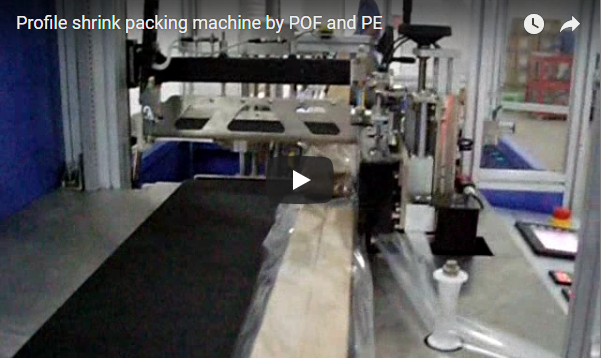
エグゼクティブサマリー This video shows a two-stage line for long products: a vertical bagging and sealing station wraps a bundle of wooden planks in clear plastic film, then a long enclosed heat shrink tunnel tightens the film into a compact, protective package. The footage covers the full cycle — feed, wrap, seal, shrink, and hand removal — for long, narrow items such as wood strips, decorative trims, and aluminum profiles.
If you ship long, narrow products — wood strips, trim mouldings, aluminum profiles — you already know the packaging problem: loose film tears, corners poke through, and bundles shift in transit. The machine in this video addresses that with a straightforward two-step approach: bag the bundle in plastic film, then pass it through a heat tunnel so the film shrinks tight around the load. The result visible in the footage is a clean, compact, fully enclosed package that is easier to stack, store, and transport.
This article walks through what the video actually shows, how the two machines work together, what the footage does and does not prove, and what a buyer should confirm before ordering.
ビデオでわかること
The video follows one bundle of light-colored wooden planks through the entire line, in roughly 30 seconds of footage:
| 時間 | 何が起こるのですか |
|---|---|
| 0:00-0:04 | A long bundle of light wooden planks is fed into a vertical shrink wrapping machine. The control panel is visible with digital readouts; plastic film is applied and sealed around the bundle. |
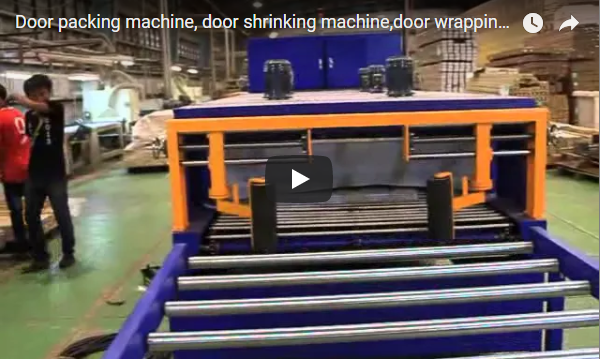
| 0:08-0:12 | The wrapped bundle travels along a green conveyor into a long, enclosed heat shrink tunnel. The camera pans along the tunnel’s length, showing multiple motors and a blue perforated top panel. |
| 0:16-0:20 | The bundle — now tightly shrink-wrapped — emerges from the far end of the tunnel. A worker wearing gloves stands by observing. |
| 0:24-0:28 | The worker lifts the finished bundle off the conveyor and carries it away. The camera follows the package as it leaves the line. |
The sequence is continuous and easy to read: feed → wrap and seal → heat shrink → exit. Nothing is edited out between stages, so you can see how the package looks at each point in the process.
機械構造の概要
The line consists of two linked machines arranged in sequence, both mounted on metal frames with wheels for positioning:
- Vertical wrapping station (off-white/light gray): holds a roll of plastic film, applies and seals the film around the bundle, and carries the main control panel — a dark gray or black faceplate with a digital display, green and red push buttons, a rotary knob, and a red emergency stop button.
- Heat shrink tunnel (long, enclosed): fitted with its own conveyor, heating elements, and motors. The top panel is blue perforated metal. It has a separate control box with a digital display and a rotary knob, plus a yellow warning label with a black triangle and exclamation mark.
- Connecting conveyor: a green belt that carries the wrapped bundle from the sealing station into the tunnel without manual handling.
The tunnel signage identifies it as a jet-type heat shrink packaging machine — a design that circulates heated air around the package rather than relying on radiant heat alone. (Exact airflow and heating configuration: check with the manufacturer.)
プロセスがどのように進むのか、ステップごとに説明します。
Step 1 — Bagging. The operator places the long bundle at the infeed of the vertical wrapping machine. Film is drawn around the load and formed into a bag shape that fully encloses the bundle, including its long sides and ends.
Step 2 — Sealing. The machine seals the film around the bundle so it stays enclosed as it moves downstream. This seal is what separates a true shrink-pack line from a simple film-wrapping setup: the package is closed before it ever reaches the heat.
Step 3 — Shrinking. Inside the tunnel, heated air causes the plastic film to contract. Over the few seconds the bundle spends inside, the loose bag tightens into a skin-like layer that conforms to the wood and compresses the load slightly. This is why the emerging package in the footage looks noticeably firmer and more compact than the raw bundle.
Step 4 — Exit and removal. The finished bundle rolls out the far end of the tunnel onto the conveyor. In the video, an operator wearing gloves removes it by hand — appropriate practice, since the product can retain warmth near the tunnel exit.
直接観察記録
The following points are kept close to what is directly visible in the footage, with only grammar-level editing:
- A long bundle of light-colored wooden planks is fed into a vertical shrink wrapping machine; the control panel shows digital readouts while film is applied and sealed.
- The wrapped bundle moves along a green conveyor belt into a long, enclosed heat shrink oven with multiple motors and a blue perforated top panel.
- The bundle, fully shrink-wrapped and compacted, emerges from the end of the shrink tunnel; a worker in gloves observes.
- The worker removes the finished bundle from the conveyor by hand.
- The wrapping machine’s panel has a digital display showing values such as 300, 150, and 210, plus push buttons and a rotary knob; the tunnel’s control box shows a value such as 185.
- A red emergency stop button is visible on the wrapping machine’s control panel.
- A yellow warning label with a black triangle and exclamation mark is visible on the shrink tunnel; the tunnel enclosure acts as a guard for heat and moving parts.
- The wood surface appears smooth and unfinished before packing; after the process it is covered in a tight, clear plastic film.
These display values (300, 150, 210, 185) are visible on screen, but their meaning — temperature, sealing time, conveyor speed, or otherwise — is not labeled in the footage. Do not treat them as specifications; verify actual parameter ranges with the manufacturer.
動画に映っていないもの
For a fair evaluation, note that the footage does not provide:
- 定格出力 — maximum bundle weight or length is not stated.
- 機械寸法 — overall length, width, and height of either unit.
- サイクルタイム — seconds per package cannot be measured precisely from the clip.
- 型番と電源要件 — voltage, amperage, and heating type are not indicated.
- 認定 — no CE, UL, or other marks are identifiable on screen.
- フィルム仕様 — the type, gauge, and width of the shrink film are not shown.
- Other product types in action — despite the title’s mention of decorative trims and aluminum profiles, the video only demonstrates wooden planks. Capability with metal profiles should be confirmed separately.
このタイプの線が当てはまる場所
Based on the product geometry shown, this configuration suits:
- Wood strips and planks for construction, flooring underlay, or furniture components
- Decorative trims and mouldings that need scratch and moisture protection in transit
- Aluminum and plastic profiles of similar long, uniform cross-sections
- Any long product where a tight, transparent package helps with handling, dust protection, and visual inspection (the clear film lets buyers see the goods without unwrapping)
Conversely, it is the right fit for irregularly shaped items, very heavy loads, or products that cannot tolerate brief heat exposure. If your product is heat-sensitive, ask the manufacturer about tunnel temperature limits and dwell time options.
Why shrink packing matters for long products
Stretch-wrap by hand leaves long bundles vulnerable: film loosens over vibration, ends stay exposed, and packages look inconsistent. A bag-and-shrink line produces a repeatable result — every bundle sealed identically, film tensioned by heat rather than operator technique. For exporters of wood and profile products, that consistency reduces damage claims and gives shipments a professional appearance on arrival.
The automated film application also reduces per-bundle labor: in the video, human involvement is limited to loading and unloading, with the wrap, seal, and shrink stages handled by the line.
購入者チェックリスト:メーカーに確認すべき事項
Before ordering, use this list — none of these items is answerable from the video alone:
- Maximum and minimum bundle length, width, height, and weight the line accepts
- Compatible film types and gauges, and typical film consumption per package
- Tunnel temperature range and conveyor speed adjustment
- Power supply requirements (voltage, phases, total connected load)
- Cycle time at your product dimensions
- Safety compliance for your market (guards, interlocks, emergency stop placement)
- Maintenance schedule and spare parts availability (heating elements, belts, seals)
- Whether heat exposure is safe for your specific surface finish
FAQ
Can this line handle aluminum profiles, or only wood? The video demonstrates wooden planks only. The wrapping and shrinking principle applies to long, uniform profiles in general, but confirm film compatibility and heat tolerance for aluminum with the manufacturer.
この回線には何人のオペレーターが必要ですか? The footage shows one worker loading/unloading. Actual staffing depends on infeed and outfeed arrangements — check with the manufacturer.
What do the numbers on the control panels mean? Values such as 300, 150, 210, and 185 are visible on the displays but not explained in the footage. Their meaning (likely temperature or timing settings) should be confirmed with the manufacturer.
Is the film sealed before shrinking? Yes. The video shows film applied and sealed at the wrapping station before the bundle enters the tunnel, producing a fully enclosed bag that then shrinks tight.
Does the machine come with safety features? Visible features include an emergency stop button on the wrapping panel, an enclosed tunnel guarding heat and moving parts, and warning labels. Whether it meets your local certification requirements is not shown — verify with the manufacturer.
関連する読書
Explore FHOPE’s other packaging machinery for long and cylindrical products:
- パイプ包装機 — automated wrapping for pipes and tubes
- ケーブル梱包機 — coiled cable and wire packaging solutions
- コイル包装機 — general coil wrapping and shrink systems
- 銅コイル包装機 — protection for copper wire and strip coils
- ベアリングパッキン — VCI and anti-rust packaging for bearings
次のステップ
If you pack long products and want a package that arrives tight, clean, and fully enclosed, send us your product dimensions, weight, and target output. We will confirm machine fit, film options, and power requirements, and recommend the right configuration for your line. Visit our コンタクトページ to request a quotation or discuss your application with our team.
Source and method: This article is based on the product video embedded above. Analysis was performed by a vision model on sampled video frames. The video contains background music only — no narration or speech track was used.
公開日: 2026年09月03日