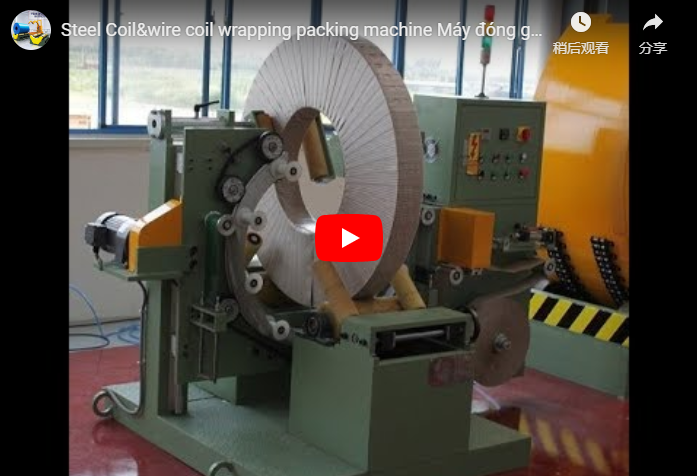
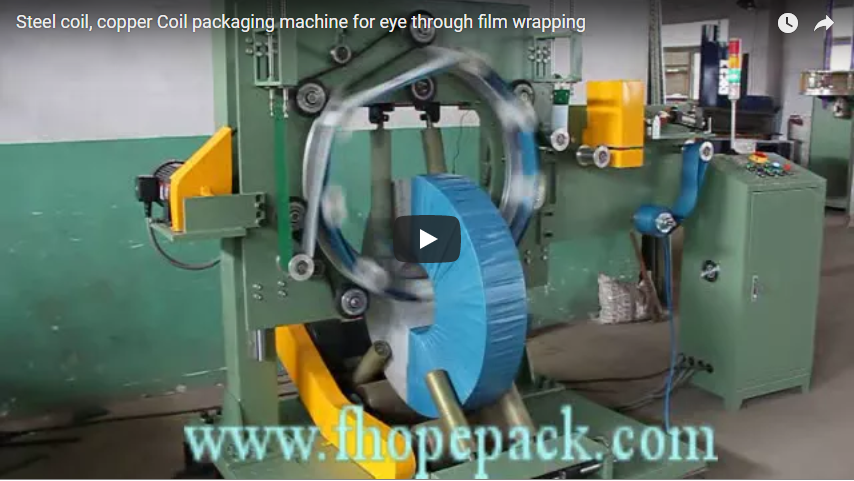
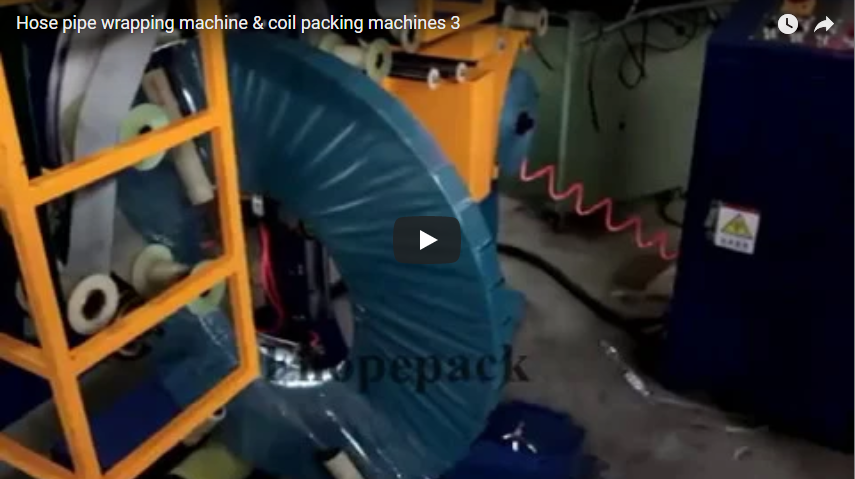
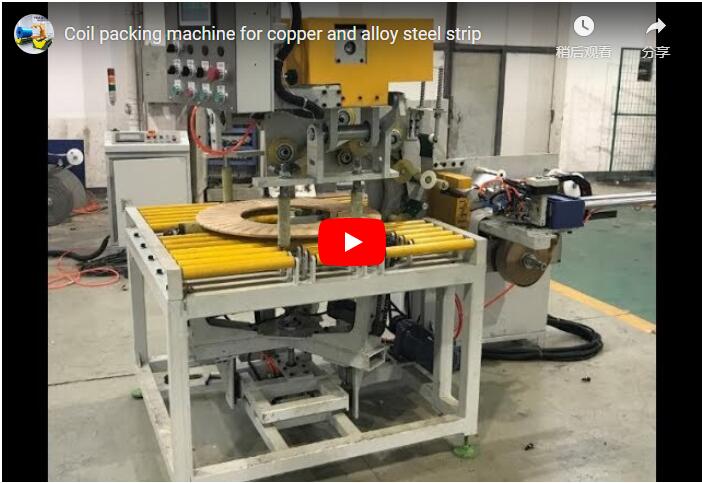
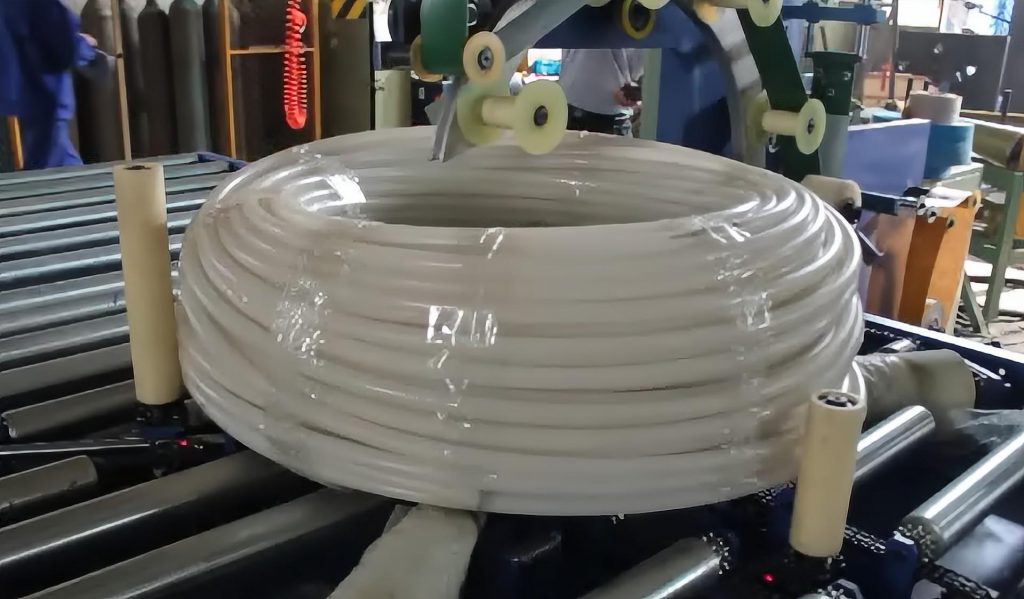
תקציר מנהלים This video shows a fully automatic steel coil packing line in operation: coils travel along a roller conveyor, a gantry-style mechanical arm positions over each coil, and coils wrapped in protective film move through the line with minimal manual handling. The footage covers feeding, conveying, positioning, and the start of the packing stage — roughly the first 96 seconds of a working cycle. Specifications such as capacity, coil size range, and cycle time are not shown; verify those directly with the manufacturer.
Steel coils are heavy, awkward, and easy to damage. Packing them by hand is slow and puts workers at risk. This video shows how an intelligent fully automatic steel coil and strip packing line handles that job: coils are fed onto a powered roller conveyor, moved into position, and prepared for packing with very little human involvement. If you are evaluating automation for a coil packing operation, this walkthrough will help you understand what the line actually does on the floor — and what you still need to confirm before buying.
המכונה בפעולה: מה שמוצג בסרטון
The footage runs for about 96 seconds and follows the coils through the early stages of the packing process. Here is the sequence, based on sampled frames:
| זְמַן | מה קורה |
|---|---|
| ≈0–12 s | A large ring-shaped steel coil sits stationary on the yellow roller conveyor, under a yellow gantry-style arm structure. A worker in dark clothing stands nearby observing. |
| ≈28–40 s | The conveyor starts. The coil moves slowly and steadily toward the right of the frame, deeper into the line. A green indicator light on the control station shows the system is running. |
| ≈40 s | A close-up of the touchscreen control panel. The interface includes status boxes and buttons; most on-screen text is too blurred to read. |
| ≈44–56 s | The coil reaches the equipment zone on the right. A mechanical arm with cabling and an end effector hovers above the coil, positioning for the packing operation. |
| ≈60–76 s | The view shifts to a second section of the line. Several coils already wrapped in transparent protective plastic film rest on the conveyor. A worker stands beside the equipment monitoring the area. |
| ≈80–92 s | The gantry arm’s end effector moves downward toward a coil, entering its working position — consistent with grabbing, locating, or pre-tensioning for strapping or wrapping. |
| ≈92–96 s | The arm retracts to its initial height. The coil remains on the conveyor, ready for the next stage. The line continues running steadily. |
הערות תצפית ישירה
The following points stay close to what is actually visible in the footage, with only grammar-level editing for readability:
- The main frame of the line is a yellow painted steel structure, including the gantry arm, support columns, and the roller conveyor; other equipment housings are light green or grey-white coated metal.
- The conveyor uses multiple parallel yellow rollers with an auxiliary chain/slat belt for positioning; rollers appear evenly spaced.
- A large ring-shaped steel coil sits with its center hole facing upward, eye-to-the-sky orientation, and moves along the conveyor without rotation or flipping.
- Coil surfaces show a dark green / yellow-brown color consistent with rust-preventive oil and oxidation; some coils are covered with translucent plastic film.
- A vertical control station on the left carries an embedded touchscreen, red/green/yellow stack indicator lights (green shown lit during operation), and a red square button on the cabinet side, likely an emergency stop — this needs confirmation.
- Yellow metal safety guardrails surround parts of the line; a transparent protective panel is visible near the right-hand equipment zone.
- Legible markings on the equipment include the FHOPE / FHOPE GROUP logos on the conveyor side and control cabinets, and a label reading "S0101" on the white control cabinet door.
- The touchscreen header displays a customer group name; other interface text is unreadable in the frames.
- No strapping heads, wrapping carriages, or final packed-pallet output are shown in completed form; the packing action is only partially visible.
מה שהסרטון לא מראה
Being clear about the gaps matters as much as describing what is visible. The footage does לֹא הצג
- תפוקה מדורגת — coils per hour or cycle time in seconds.
- טווח גודל סליל — minimum/maximum outer diameter, inner diameter, width, and weight capacity.
- חשמל ושירותים — motor ratings, hydraulic pressure, compressed air requirements.
- Complete packing detail — the strapping or wrapping action is only glimpsed; film type, strap type, and number of straps are not shown.
- פרטי מערכת הבקרה — PLC brand, HMI menu structure, or MES/WMS integration options.
- אישורי בטיחות — no CE, UL, or ISO marks are visible.
- דרישות תחזוקה — service intervals, spare parts, or lubrication points.
- Alarm and fault-handling behavior — no fault states or self-diagnostics are demonstrated.
Treat every one of these as a question for the manufacturer. A video can prove the machine runs; it cannot prove it meets your specification.
How the process fits together
Based on the observed sequence, the line follows a straightforward flow:
- Loading and staging. Coils arrive on the roller conveyor, eye-horizontal, either placed by a previous process or an overhead handling device.
- Conveying and positioning. The roller conveyor (assisted by the slat/chain section) carries each coil into the working zone at a controlled speed. The green stack light indicates running status.
- Positioning by the gantry arm. The overhead arm lowers its end effector over the coil — consistent with locating, stabilizing, or preparing the coil for the packing station.
- Packing stage. The coil enters the integrated packing unit on the right side of the line. The full wrapping or strapping cycle is not fully shown in this clip.
- פריקה. Wrapped coils (visible with transparent film earlier in the video) continue down the line toward the next step, which the video does not cover.
The consistent theme is hands-off handling between loading and packing. Workers appear only as observers, standing outside the machine’s working envelope.
Why this matters for coil producers
Manual coil packing typically means workers walking around heavy coils, bending under coils to apply wrap, and exposure to sharp strip edges. A line like the one shown reduces that exposure because:
- Conveying is automated. Coils move between stations on rollers, not by forklift or crane between standalone machines.
- Positioning is repeatable. The gantry arm brings the end effector to the same relative position each cycle, which supports consistent wrapping quality.
- Film protection is already applied in-line. Coils seen on the conveyor carry transparent protective film, indicating the line integrates surface protection before or during packing.
- Status is visible at a glance. The three-color indicator tower lets one supervisor monitor line state from a distance.
These are qualitative observations drawn from what the video shows — actual productivity gains depend on your coil mix and line configuration.
Safety observations for buyers and operators
The visible safety provisions include yellow guardrails, a transparent protective panel, a signal tower, and (probably, though not clearly shown) an emergency stop on the control cabinet. The moving gantry arm has a large working radius, so keep personnel out of its travel path during operation, and confirm the following with the manufacturer:
- Exact location and testing procedure for emergency stops.
- Whether light curtains or interlocked gates protect the arm’s working zone.
- Lockout/tagout points for conveyor and arm maintenance.
מה לוודא מול היצרן
Before committing to a line of this type, put these questions in writing:
- Coil specification range (OD, ID, width, weight) the line accepts.
- Cycle time from loading to packed-coil discharge.
- Packing materials supported (stretch film, VCI film, woven strap, steel strap) and number of straps per coil.
- Whether the control system supports remote monitoring or factory system integration.
- Safety design standard applied (guarding, e-stop layout, interlocks).
- Installation, commissioning, spare parts, and after-sales support terms.
שאלות נפוצות
Is the line fully automatic, as the title suggests? The video shows automated conveying, positioning, and the start of packing, with workers only observing. The full packing and discharge cycle is not shown, so confirm the complete automation scope with the manufacturer.
איזה גודל סלילים הוא יכול להתמודד איתו? Coil dimensions are not stated in the footage. The coils visible are large ring-shaped coils (apparently over one meter in outer diameter), but exact capacity limits must be confirmed with the manufacturer.
Does it wrap coils in film? Yes — several coils on the conveyor are visibly covered with transparent protective plastic film, indicating in-line film wrapping is part of the process. Film type and thickness are not shown.
What kind of control interface does it use? The line uses a touchscreen control station with a three-color indicator tower. Screen text is not readable in the video, so details about the HMI and control system should be requested from the manufacturer.
Does it also handle steel strip (narrow coils)? The title refers to steel coil and strip packing, but the coils shown appear to be wider coils. Confirm with the manufacturer whether dedicated tooling or guides are available for narrow strip coils.
מקור ושיטה
This article is based on the linked video only. Analysis was performed by a vision model on frames sampled at 4-second intervals; the video contains background music only, with no narration or speech to transcribe. All timings are approximate, based on frame positions. Anything not clearly visible has been omitted or flagged for confirmation.
קריאה קשורה
- Automatic coil packing line overview
- קווי אריזה אוטומטיים
- מכונת עטיפת סלילי פלדה
- מכונות לחיזוק סלילי פלדה
שלב הבא
If this line matches your coil packing requirements, the details that matter — coil size range, cycle time, and packing configuration — are one conversation away. Visit our דף קשר to request specifications, a quotation, or a live demonstration arrangement.