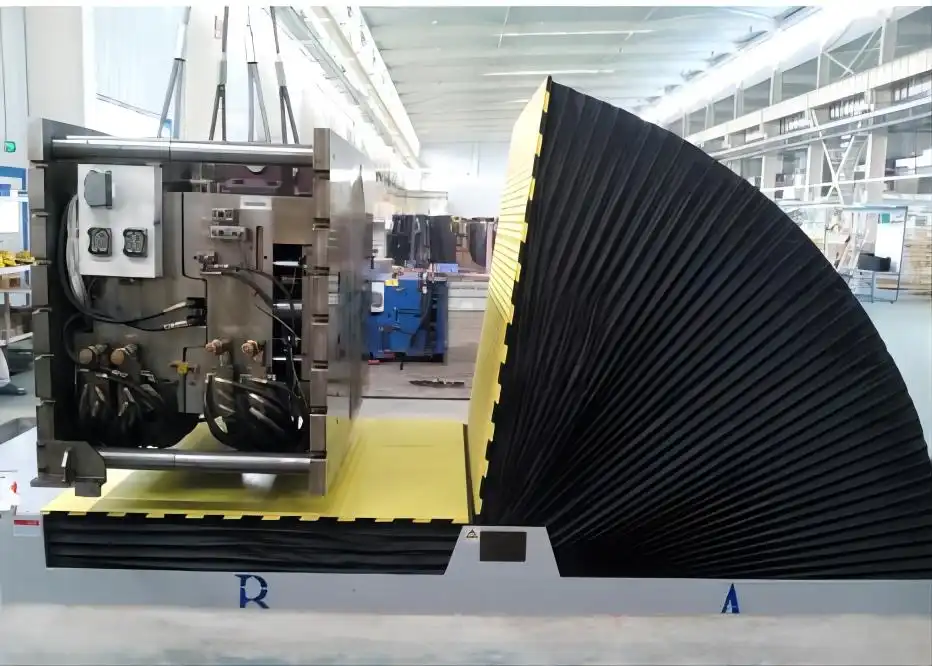
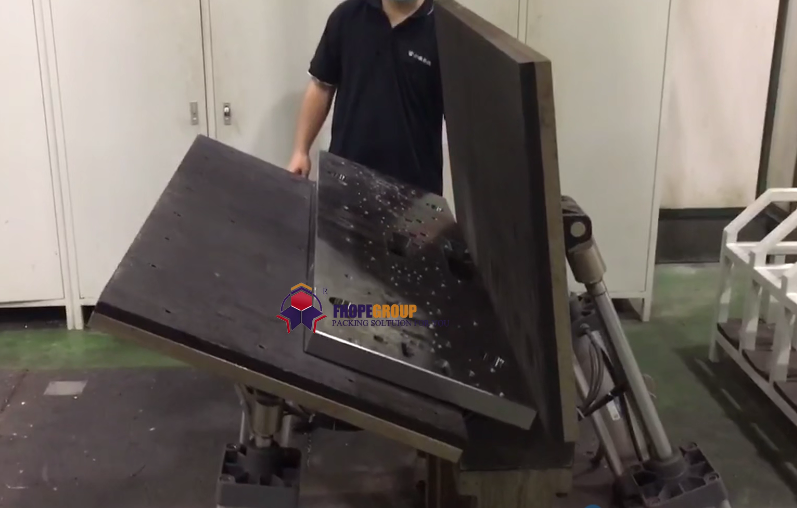
Sintesi esecutiva In questo video di 77 secondi, il nostro ribaltatore a L ruota un grande alloggiamento in fusione rosso dalla posizione orizzontale a quella verticale, tenuto in un dispositivo di fissaggio giallo sagomato contrassegnato con 15T. La rotazione è lenta e continua, il che corrisponde al tempo di rotazione di 60-90 secondi che indichiamo per questa classe di telaio. Per le fusioni, il dispositivo di fissaggio è importante quanto il telaio: determina dove si trova il baricentro durante la rotazione e quali superfici sopportano il carico.
Sommario
- Cosa mostra il video
- Perché una fusione necessita di un dispositivo di fissaggio personalizzato
- Centro di gravità durante una svolta di 90°
- Dimensionamento del telaio: classe di carico e tempo di rotazione
- Come progettiamo l'apparecchio
- Lista di controllo per la selezione di un ribaltatore di casting
- Controlli e sicurezza
- FAQ di ingegneria
- Passo successivo
- Lettura correlata
- fonti
Cosa mostra il video
La registrazione è una clip verticale di 77 secondi, girata sul pavimento della nostra officina.
- La macchina è un ribaltatore a L: una base verde con una culla gialla composta da una piastra di base e una piastra posteriore ad angolo retto.
- Il pezzo in lavorazione è un grande getto rosso, un alloggiamento con diverse porte flangiate.
- Un supporto rialzato e sagomato di colore giallo, posto sulla culla, accoglie il pezzo fuso. Sul lato del dispositivo è presente la marcatura 15T.
- Il supporto ruota lentamente e costantemente per quasi tutta la durata della registrazione, portando il pezzo fuso dalla posizione orizzontale a quella verticale. Il pezzo fuso rimane saldamente fissato al supporto per tutta la durata del processo.
- Nessuno si avvicina alla macchina e non viene utilizzata alcuna gru durante la rotazione.
Perché una fusione necessita di un dispositivo di fissaggio personalizzato
Uno stampo o un blocco d'acciaio ha superfici piane. Si appoggia sulla piastra di base e, man mano che il telaio ruota, si assesta contro la piastra posteriore. Una fusione è diversa:
- Forma irregolare. Le porte e le flange sporgono, quindi il pezzo fuso poggerebbe su alcuni punti anziché su una superficie.
- Spostare il baricentro. Lo spessore delle pareti varia, quindi la massa raramente si trova al centro del contorno.
- Volti da proteggere. Le flange e le superfici di tenuta lavorate non devono sopportare carichi né essere graffiate.
Il dispositivo trasforma una forma irregolare in una stabile. Fornisce al pezzo fuso punti di appoggio definiti su superfici ruvide, mantiene libere le superfici lavorate e lo mantiene in una posizione nota rispetto al perno. Ecco perché la culla nella clip è dotata di un supporto sagomato, non di una piastra piatta.
Centro di gravità durante una svolta di 90°
Su un ribaltatore a L, il carico poggia inizialmente sulla piastra di base. Man mano che il telaio ruota, il peso si sposta progressivamente sulla piastra posteriore. A metà della rotazione, il peso viene distribuito su entrambe le piastre.
Seguono due regole:
- Mantenere il baricentro all'interno dell'area di appoggio in ogni angolazione. Se passa al di fuori dei punti di contatto, il getto si inclina all'interno del dispositivo invece di ruotare con esso.
- Mantieni il baricentro vicino al punto di rotazione. Il meccanismo di azionamento deve resistere al momento di carico, che è pari al peso del carico moltiplicato per la distanza orizzontale tra il perno e il centro di gravità. Un dispositivo di fissaggio che inserisce il pezzo fuso più in profondità nella culla riduce tale distanza e rende più fluida la rotazione.
Prendiamo il disegno della fusione, troviamo il baricentro e verifichiamo la sua traiettoria lungo l'intera curva di 90° prima di definire la geometria del dispositivo di fissaggio.
Dimensionamento del telaio: classe di carico e tempo di rotazione
La nostra gamma standard di ribaltatori per stampi a 90° rappresenta un punto di partenza. Valori tratti dalla pagina del prodotto:
| Modello | Max. Caricamento in corso | Potenza | Tempo di svolta | peso macchina |
|---|---|---|---|---|
| FPMT-10 | 10 t | 3.0kW | 60-90 s | 3.5 t |
| FPMT-20 | 20 t | 5.5kW | 70-90 s | 4.0 t |
| FPMT-30 | 30 t | 10.5kW | 70-90 s | 5.0 t |
Il ribaltatore nella clip è contrassegnato con 15T, tra i telai da 10 t e 20 t. Per noi è normale. Costruiamo ogni telaio per il carico effettivo. La stessa classe di carico può richiedere un motore e un peso della macchina diversi quando il pezzo è più grande o il suo baricentro è più esterno. Una fusione pesante ma compatta e una più leggera ma ingombrante possono finire per essere montate sullo stesso telaio.
Le dimensioni del piano di lavoro e della macchina sono progettate in base al carico, quindi l'attrezzatura e i piani di lavoro vengono disegnati attorno al pezzo da lavorare, anziché essere scelti da un catalogo.
Come progettiamo l'apparecchio
Per una dima di fusione lavoriamo a partire da quattro input:
- Disegno di fusione con peso e baricentrooppure un modello 3D che possiamo pesare in CAD.
- Il supporto affronta: superfici grezze in ghisa che l'apparecchio può toccare e superfici che non deve toccare.
- Orientamento prima e dopo la svolta: come arriva il getto e come deve essere presentato per la lavorazione, l'assemblaggio o l'ispezione.
- Parte della famiglia: se più fusioni condividono un ribaltatore, progettiamo un dispositivo di fissaggio di base con inserti intercambiabili.
Il dispositivo finito è realizzato in acciaio saldato, verniciato e fissato al supporto. Quando una famiglia di componenti comprende diverse misure, verifichiamo ogni misura rispetto alla regola del baricentro, non solo la più pesante.
Lista di controllo per la selezione di un ribaltatore di casting
- Fusione più pesante e relativo baricentro, con disegno o modello.
- Contorno massimo: lunghezza, larghezza e altezza nella posizione iniziale.
- Le facce che possono sopportare un carico e le facce che devono rimanere libere.
- Angolo di rotazione necessario: 90° o 180° (per una rotazione completa vedere il nostro Inverter di carico a 180°).
- Come viene caricato e scaricato il getto: gru, carrello elevatore o un carrello di trasferimento ferroviario.
- Cicli per turno, che definiscono il servizio di guida e il tempo di svolta.
- Superficie calpestabile, fondamenta e tensione di alimentazione nel punto di installazione.
Controlli e sicurezza
Gli standard applicabili dipendono dal mercato di destinazione. Per i mercati CE, la norma ISO 12100 definisce il metodo di valutazione del rischio, mentre la norma EN 415-10 disciplina i requisiti generali per le macchine confezionatrici, specificando le protezioni e il dispositivo di arresto di emergenza.
La zona di svolta rappresenta il pericolo. Nessuno deve sostare all'interno dell'area di movimento del carrello durante lo spostamento, e le operazioni di carico e scarico possono avvenire solo con il carrello fermo nella sua posizione finale.
FAQ di ingegneria
D: Perché il dispositivo di fissaggio è più importante per le fusioni che per gli stampi? R: Una fusione ha una forma irregolare e un baricentro decentrato. Il dispositivo di fissaggio fornisce punti di supporto definiti e mantiene il baricentro all'interno dell'area di supporto per tutti i 90°.
D: Quanto tempo ci vuole per una svolta di 90°? R: I nostri telai standard per 90° indicano 60-90 secondi per il telaio da 10 t e 70-90 secondi per i telai da 20 t e 30 t. Il video mostra una svolta lenta e continua che rientra in questo intervallo.
D: Il nostro pezzo fuso pesa 15 t. Di quale telaio abbiamo bisogno? R: Dipende dalle dimensioni e dal baricentro, non solo dal peso. L'unità nel video è contrassegnata con 15T; misureremo il vostro pezzo in base al disegno e potremmo costruirlo su un telaio più robusto se il pezzo è ingombrante.
D: Come si sposta il carico sulle piastre durante la rotazione? R: La fusione inizia interamente sulla piastra di base. Quando il supporto ruota di 90°, il carico si sposta progressivamente sulla piastra posteriore; a metà del processo, il carico è distribuito su entrambe le piastre.
D: Ci serve un ribaltatore a 90° o a 180°? R: Il ribaltatore a 90° posiziona il pezzo in verticale o in orizzontale. Il ribaltatore a 180° lo capovolge per raggiungere la parte inferiore. La nostra gamma di ribaltatori per stampi include entrambi i tipi.
Passo successivo
La misurazione di un ribaltatore per fusioni avviene in tre fasi:
- Invia il tuo disegno di progetto con il disegno di fusione, il peso, il centro di gravità e l'angolo di rotazione necessari, per info@fhopepack.com.
- Riceverai una proposta entro 48 ore, compresi il telaio, l'azionamento e un concetto di fissaggio disegnato attorno alla fusione.
- Prenota un sopralluogo confermiamo quindi il metodo di carico, il pavimento e lo spazio per la spazzola a culla.
Lettura correlata
- Ribaltatore e capovolgitore di stampi industriali: movimentazione di stampi pesanti
- Ribaltatore e ribaltatore per stampi
- Il ritorno sull'investimento della sicurezza: ribaltatori di stampi a 90 gradi invece del ribaltamento con gru
- Ribaltatore stampi
fonti
- Macchina, attrezzatura, fusione e tornitura: il video su YouTube (77 s; @fhope9014)
- Gamma di telai, carico, potenza, tempo di rotazione, peso della macchina: Ribaltatore stampi
- Ambito di applicazione della norma: ISO 12100:2010; IT 415-10: 2014
- Tempistiche della proposta: CTA della casa approvata (proposta entro 48 ore)
Ultimo aggiornamento: 06/10/2026