Sintesi
A hydraulic wire coil compacting machine compresses a loose coil of black wire into a dense bale with a central hydraulic ram and ejects it by tilting the base.
Sommario
- Cosa fa questa macchina
- Telaio e trasmissione
- Cycle and wrap
- Cosa supporta il filmato dimostrativo
- Dimensionamento e configurazione
- Funzionamento e sicurezza
- FAQ di ingegneria
- Passo successivo: lista di controllo della richiesta di offerta (RFQ)
- Lettura correlata
- Fonti e standard
Cosa fa questa macchina
A loose wire coil takes up space and shifts during handling. This machine class compresses the coil with a central hydraulic ram on a circular platform, compacting it into a dense bale that is then ejected.
Use this page to decide whether a hydraulic coil compactor fits your wire flow, and to see which data FHOPE asks for to size one.
Telaio e trasmissione
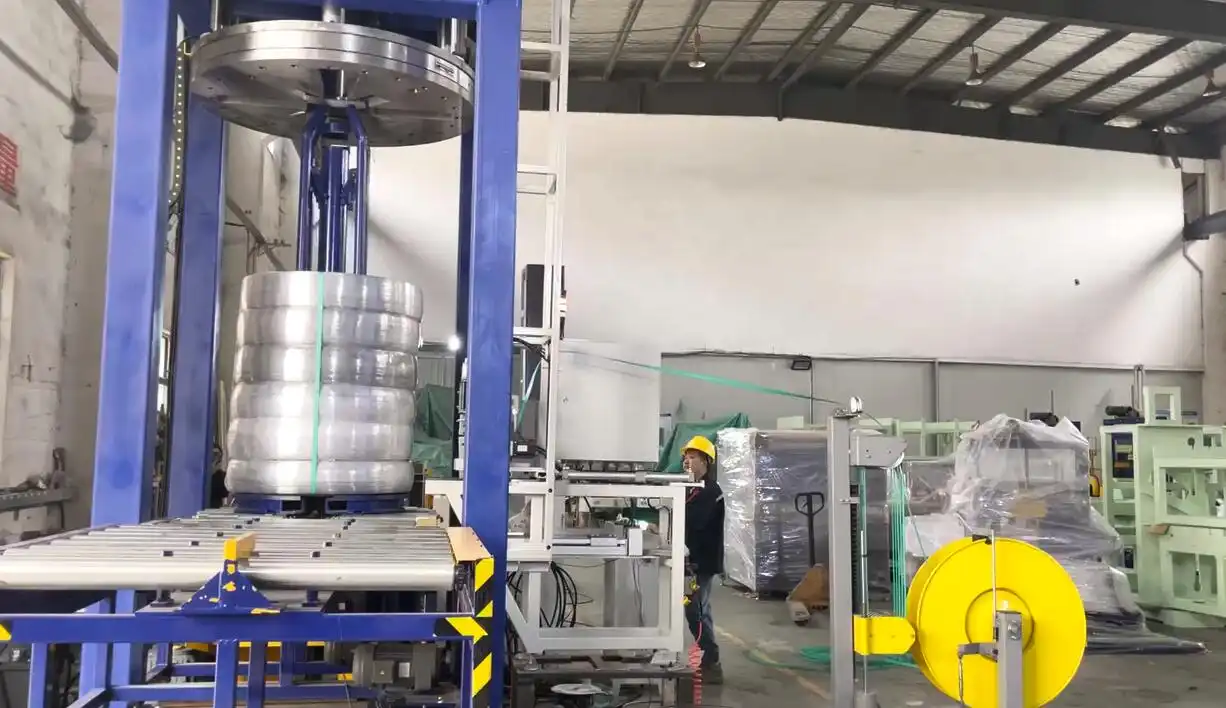
The machine has a white vertical frame with a central hydraulic ram, a circular platform, and a control panel.
Compaction force and platform size are set in the sizing step.
Cycle and wrap
The cycle starts with the coil of wire on the platform: the ram descends to compress the coil, then retracts lifting the compacted coil. The base can tilt to eject the baled coil.
An operator observes from beside the machine; cycle time is confirmed with your coil in the sizing step.
Cosa supporta il filmato dimostrativo
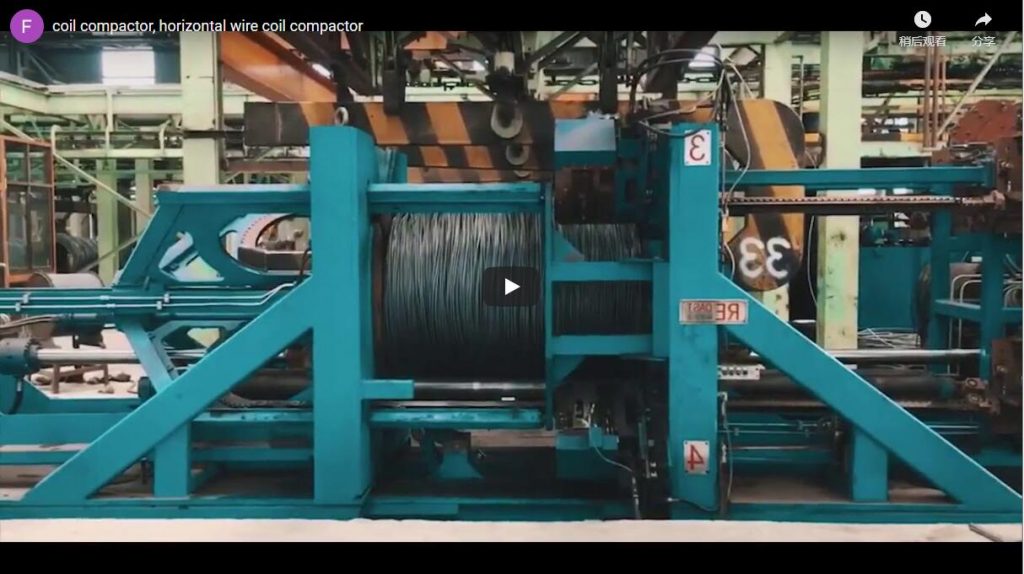
The clip shows a large coil of black wire on the platform being compressed by the ram, then lifted and held by the upper mechanism.
It is a general demonstration. It does not show rated compaction force, max coil weight and size, cycle time, or strapping specification. Those points are confirmed in the enquiry, not assumed.
Dimensionamento e configurazione
This machine is sized from your load range and site, not from a fixed rating plate. Confirm the following with FHOPE in the enquiry:
| Dati da confermare | Ciò che determina |
|---|---|
| Load weight and size range (kg, mm) | Frame, drive and station sizing |
| Consumable type and grade | Consumable stock and tension settings |
| Carichi per turno | Dimensionamento della linea e tempo di ciclo |
| How the load enters and leaves | Attrezzatura di carico e disposizione |
| Alimentazione elettrica (tensione, fase, frequenza) | Costruzione di azionamento e controllo. Impianto elettrico standard per abitazione: 380 V trifase 50 Hz, opzione monofase 220 V, da confermare in loco. |
Ogni fila viene verificata in base alle condizioni del tuo sito prima della costruzione.
Funzionamento e sicurezza
Keep clear of the moving parts while the machine runs, and check the drives and consumable feeds per the machine manual. Stop the machine and isolate the power supply before clearing a jam or reaching near the load, and apply lock-out per the site procedure before any service work.
FAQ di ingegneria
Q: What does this hydraulic coil compacting machine do? A: It compresses a loose wire coil with a central hydraulic ram into a dense bale on a circular platform.
Q: How is the baled coil removed? A: The base can tilt to eject the baled coil after the ram retracts.
Q: What frame does it use? A: A white vertical frame with a central hydraulic ram, a circular platform and a control panel.
Q: Can strapping be added before ejection? A: Yes, strapping is an option to confirm with the builder; the demonstrated cycle covers compaction and ejection.
D: Di che tipo di alimentazione elettrica ha bisogno? R: L'impianto elettrico tipico di una casa è a 380 V trifase 50 Hz; gli apparecchi leggeri possono essere alimentati a 220 V monofase. Confermare la disponibilità dell'alimentazione in loco nella richiesta.
Passo successivo: lista di controllo della richiesta di offerta (RFQ)
- Email info@fhopepack.com with your wire coil weight and size range.
- State whether strapping before ejection is required.
- Submit your layout drawing of the coil infeed and ejection area.
- Receive a proposal with compaction force and cycle time within 48 hours, and book a site survey if you want the pit and layout checked before the build.
Lettura correlata
- Linee di prodotti per macchinari di confezionamento FHOPE
- Linea automatica di confezionamento di bobine di nastro di rame con etichettatura, avvolgimento e impilamento
- Macchina imballatrice economica per cavi: specifiche FPCA, tempo di avvolgimento e impostazione della sovrapposizione
- Linea di confezionamento di bobine tagliate per centri di assistenza: reggiatura, avvolgimento con occhiello e impilamento
Fonti e standard
- ISO 12100:2010 Sicurezza del macchinario, principi generali per la progettazione e la valutazione dei rischi
- EN 415-10:2014 Sicurezza delle macchine per l'imballaggio, requisiti generali
The standards that apply depend on the destination market. For CE markets, ISO 12100 sets the machinery risk-assessment method for this compaction equipment.
Demonstration footage (video 1ntn_yl0WBc) reviewed as a general machine demo; rated outputs are not shown in the clip and are therefore not quoted. Last reviewed: 2026-10-18.