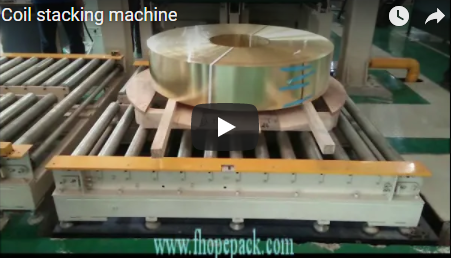
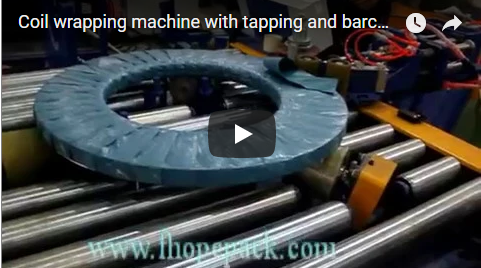
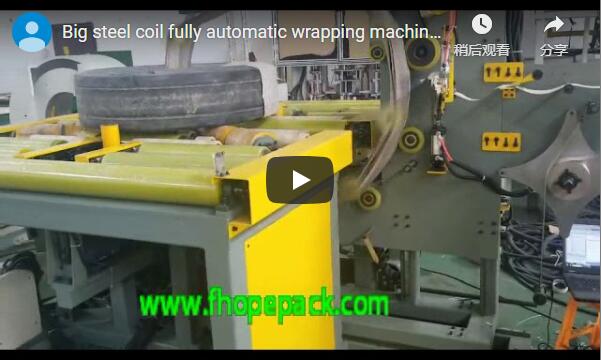
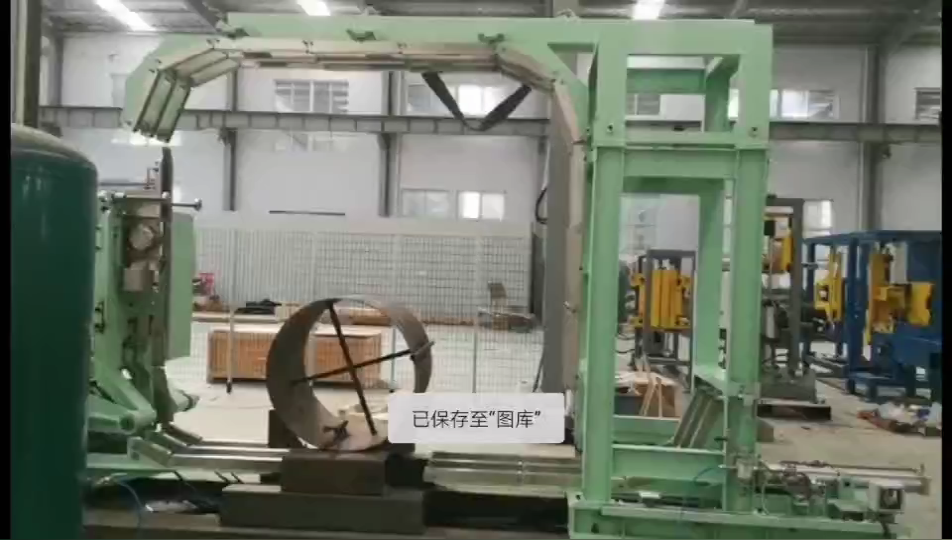
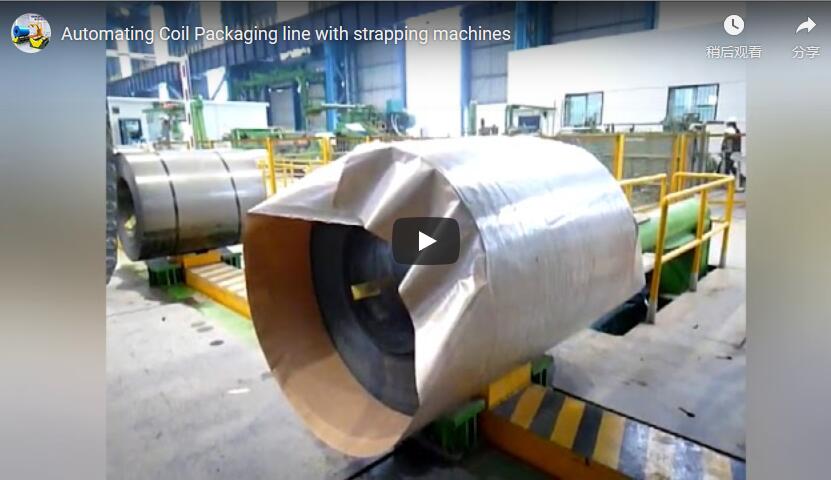
Sintesi Tra il laminatoio e l'area di spedizione, una bobina di acciaio deve essere posizionata, sigillata e avvolta. Eseguire queste operazioni con un gancio di gru e attrezzature manuali è lento, faticoso e rappresenta il momento in cui si verificano la maggior parte dei danni superficiali. Una linea automatica di imballaggio per bobine di acciaio afferra la bobina, ne tratta le estremità e la avvolge su rulli motorizzati, senza che l'operatore debba sollevarla in nessuna fase. Il breve video qui sotto mostra una linea che passa da una bobina all'altra; il resto di questa pagina spiega la funzione di ciascuna stazione, quando aggiungerla e come dimensionare la geometria di supporto in base alla gamma di bobine.
Sommario
- La linea in sintesi
- Come si muove la bobina attraverso la linea
- Stazioni aggiuntive e quando ciascuna si ripaga da sola
- Supporto per bobina: la regola del passo di rotolamento
- Controlli e sicurezza
- Lista di controllo per la selezione
- FAQ di ingegneria
- Dati di specifica pubblicati
- Lettura correlata
- fonti
- Passo successivo
La linea in sintesi
Una linea di confezionamento di bobine d'acciaio non è una singola macchina. Si tratta di una sequenza fissa e interconnessa di stazioni che la bobina attraversa una sola volta: la bobina viene afferrata, le sue estremità vengono pressate e sigillate, la bobina viene avvolta e rilasciata. La bobina lascia la linea orientata e protetta per la successiva area di lavorazione.
Cosa significa questo in termini pratici: per chi prima doveva agganciare le catene alla bobina a ogni trasferimento, si eliminano la maggior parte di quei sollevamenti manuali. Per il supervisore di linea, la posizione della bobina in uscita da ogni stazione è ripetibile, quindi la stazione successiva non deve ritrovare la bobina.
Come si muove la bobina attraverso la linea
Nella clip la sequenza si svolge in questo modo:
- Alimentazione in ingresso. La bobina arriva distesa su un trasportatore a rulli motorizzato antiscivolo.
- Presa e centratura. Un carrello di serraggio idraulico afferra la bobina, la solleva all'altezza di lavoro e la centra sopra la stazione; il piano a rulli lavora in sinergia con la forza di serraggio in modo che la bobina non possa oscillare.
- Trattamento della parte terminale della faccia. La stazione di discesa si abbassa sulla bobina mentre questa viene tenuta ferma, preme e sigilla la superficie terminale della bobina, quindi si solleva.
- Incartare. La bobina viene riposizionata sul nastro trasportatore e spostata in una stazione di avvolgimento dedicata.
- Pubblicazione. Il meccanismo si ripristina e la bobina lascia la stazione orientata verso la successiva area di processo.
Stazioni aggiuntive e quando ciascuna si ripaga da sola
Non tutte le linee necessitano di tutte le stazioni. Aggiungere una stazione solo quando il percorso della bobina o il processo lo richiedono.
| Deposito lucchetti | Cosa aggiunge | Aggiungilo quando… |
|---|---|---|
| Inclinatore o abbassatore della bobina | Ruota o riorienta la bobina (da occhio al cielo a occhio al muro, o pressione sulla faccia terminale). | Il tuo involucro richiede uno specifico orientamento degli occhi e le bobine arrivano in un altro |
| Carrello di presa e centraggio | Morsetto idraulico con movimento di sollevamento e centraggio | Le bobine devono essere posizionate fuori dal nastro trasportatore o centrate senza gru |
| Stazione di confezionamento | Pellicola estensibile motorizzata che avvolge la circonferenza e le superfici | È previsto l'utilizzo di bende elastiche o di un involucro protettivo |
| Stazione di reggiatura | Cinghia radiale o circonferenziale prima della spedizione | Le bobine devono essere fissate in modo sicuro per l'impilamento o il trasporto su lunghe distanze. |
| Pesatura (facoltativa) | Cattura del peso della bobina in linea | È necessario indicare il peso sui documenti di spedizione, sull'inventario o sulla convalida del carico. |
| Torre di segnalazione | Stato a tre colori all'alimentazione | Un operatore ha bisogno di avere lo stato della linea a colpo d'occhio |
La fase di avvolgimento accetta modelli programmabili, percentuale di sovrapposizione e tensione del film in base alle dimensioni della bobina e al tipo di superficie, come descritto nella documentazione del prodotto FHOPE. Questi parametri vengono impostati nel programma di controllo in fase di messa in servizio, non sono fissi in fabbrica.
Supporto per bobina: la regola del passo di rotolamento
La geometria su cui non si può transigere è il modo in cui la bobina si posiziona sul nastro trasportatore. La regola progettuale prevede che ci siano almeno tre rulli sotto la bobina più piccola per cui la linea è stata progettata. Un numero inferiore di punti di contatto permette a una bobina leggera o stretta di oscillare tra i rulli e compromettere l'allineamento di serraggio.
Esempio pratico illustrativo, con etichette, e non una specifica:
| Articolo | Valore |
|---|---|
| Diametro esterno della bobina più piccola (a titolo illustrativo) | 800 mm |
| Roller pitch (a scopo illustrativo) | 200 mm |
| Rulli sotto la bobina, 800 diviso 200 | 4 |
Se la bobina più piccola è più piccola, restringi il passo; se la tua gamma è ampia, verifica il caso peggiore per ogni progetto invece di fare una media. Una linea integrata copre in genere la fascia industriale media. Le bobine hanno un diametro esterno di circa 600-800 mm su rulli di circa 100 mm, con bobine più grandi di circa 1.2-1.5 m di diametro esterno e 0.6-0.8 m di diametro interno. Il diametro esterno, il diametro interno, la larghezza e il peso esatti per la tua linea vengono definiti in fase di progettazione, e la gestione dell'asse della bobina viene fissata alla tua gamma di bobine nella stessa fase.
Controlli e sicurezza
L'architettura di sicurezza è progettata in conformità ai requisiti di progettazione CE (EN ISO 13849-1 / EN 415-10) e OSHA. La fornitura standard comprende una recinzione perimetrale interbloccata attorno alla cella di sicurezza, barriere fotoelettriche di sicurezza silenziate all'ingresso e all'uscita del nastro trasportatore e circuiti di arresto di emergenza a doppio canale in ogni postazione operatore. Il personale può accedere alla cella solo quando la linea è ferma e isolata.
La linea segue una sequenza interbloccata e controllata da PLC: il morsetto, il dispositivo di discesa e il trasportatore non possono funzionare fuori sequenza, in modo che una bobina non bloccata non venga mai trasportata oltre una testa mobile. Una torre di segnalazione tricolore mostra il verde durante il funzionamento della linea e il rosso o l'ambra con comportamento di ripristino in base al programma di controllo. L'applicabilità della clausola per il vostro mercato di destinazione viene confermata in fase di progettazione.
Lista di controllo per la selezione
- Diametro esterno e interno (diametro interno e peso) della bobina, minimo e massimo, per impostare il passo dei rulli e il carico nominale del morsetto.
- Orientamento visivo richiesto all'avvolgitore, per scegliere tra l'inclinazione o l'alimentazione orizzontale diretta.
- Materiale di imballaggio, sovrapposizione e necessità di reggiatura, impostazione delle stazioni di avvolgimento e reggiatura e programma di pellicola.
- Tempo di ciclo e obiettivo di posizionamento, da concordare con il nostro team di ingegneri.
- Ambito di sicurezza: recinzione, porte interbloccate, arresto di emergenza e aperture per barriere fotoelettriche, secondo gli standard del mercato di destinazione.
- Interfaccia di controllo: piattaforma PLC, bus di campo e diagnostica remota, come concordato in fase di progettazione.
FAQ di ingegneria
D: La linea necessita di un operatore? R: No, in condizioni di normale funzionamento la sequenza si svolge in modo completamente automatico e richiede un operatore solo per la supervisione, mai per il sollevamento.
D: Quanti rulli devono stare sotto una bobina? R: Almeno 3 rulli sotto la bobina più piccola della vostra gamma; la bobina da 800 mm con passo di 200 mm nell'esempio illustrato poggia su 4 rulli.
D: Come faccio a sapere se la linea è pronta? R: Una torre di segnalazione tricolore all'ingresso mostra il verde durante il funzionamento della linea, e il rosso o l'ambra con un passo di ripristino automatico al termine del programma di controllo.
D: Cosa fa la linea alle superfici terminali della bobina? R: La stazione di discesa preme e sigilla la superficie terminale della bobina prima dell'avvolgimento, e, se necessario, è possibile specificare una protezione interna dell'avvolgimento per il diametro interno della bobina.
D: L'asse della bobina è sempre orizzontale? R: È orizzontale nell'alimentazione in linea standard; quando la macchina avvolgitrice necessita di una bobina verticale o il layout lo richiede, viene aggiunta un'opzione di inclinazione e la gestione dell'asse viene definita in fase di progettazione.
Dati delle specifiche pubblicati: confrontali con la tua linea
Queste sono le dichiarazioni sui prodotti pubblicate da FHOPE. Prima dell'acquisto, verifica ciascuna di esse confrontandola con la citazione riportata.
- Il dispositivo di ribaltamento delle bobine ruota le bobine di 90° (da occhio verso il cielo a occhio verso la parete) come prima stazione della linea e può ospitare un sistema di pesatura integrato per i documenti di spedizione e le registrazioni di inventario.
- L'avvolgimento con film estensibile è completamente automatizzato e programmabile: schema di avvolgimento, percentuale di sovrapposizione e tensione del film in base alle dimensioni della bobina e al tipo di superficie.
- La letteratura di settore cita una produttività delle linee di avvolgimento integrate di circa 60 bobine/ora, e la stampa specializzata ha a lungo indicato la sigillatura e la reggiatura delle code come il primo collo di bottiglia sulle linee di taglio (The Fabricator, 2003), con un tempo di impilamento dell'ordine di 40-45 secondi per bobina in quell'analisi. Considerate la produttività come un obiettivo da raggiungere, non come un valore minimo.
Lettura correlata
- Linea di confezionamento bobine automatica
- Macchina avvolgitrice per bobine d'acciaio
- Bobina rovesciata
fonti
- Funzionamento della linea: il nostro video su YouTube.
- Specifiche della macchina: team di ingegneri FHOPE, 08/10/2026.
- Figure relative a rulli e bobine: esempio pratico illustrativo e figure indicative per la realizzazione di un progetto.
- Documentazione di prodotto: pubblicazioni della linea di imballaggio di bobine d'acciaio FHOPE.
- Riferimento di settore: The Fabricator, 2003 (analisi della sigillatura e dell'impilamento della coda della linea di taglio).
Passo successivo
- Invia la tua gamma di bobine e il disegno di layout a info@fhopepack.com — Dimensioni esterne, interne, larghezza e peso minimi e massimi, oltre all'ingombro del sito.
- Riceverai una proposta entro 48 ore con la disposizione stazione-stazione, il passo dei rulli e l'elenco delle stazioni dimensionati in base alla tua gamma.
- Prenota un sopralluogo gratuito Pertanto, l'accesso all'edificio, la profondità della fossa e la fornitura di energia elettrica vengono verificati in loco prima dell'ordine.
Ultimo aggiornamento: 08/10/2026