Ringkasan Eksekutif
A protection film lamination machine presses a self-adhesive protective film onto the face of a flat sheet or panel as it passes between rollers. The film keeps stainless steel sheet, coated metal and door panels free of scratches and dirt through cutting, forming, transport and fitting. The machine in this line is fed by hand from a roller table. A worked example sizes the film for a 1,250 × 2,500 mm sheet.
Daftar Isi
- Why sheet and panels get protection film
- How the lamination machine works
- Getting a flat, bubble-free film
- Worked example: film for a 1,250 × 2,500 mm sheet
- After lamination
- Daftar periksa pemilihan
- Keamanan: EN 415-10 dan ISO 12100
- Pertanyaan yang Sering Diajukan (FAQ) tentang Teknik
- Langkah selanjutnya
- Bacaan terkait
- sumber
Why sheet and panels get protection film
A polished or brushed stainless sheet is sold on its surface. A single scratch from a forklift fork, a glove or the next sheet in the stack can make it a reject. A thin self-adhesive film over the face takes those marks instead. It stays on through cutting, bending and transport, and the installer peels it off at the end. Door panels and coated metal sheet are protected the same way.
How the lamination machine works
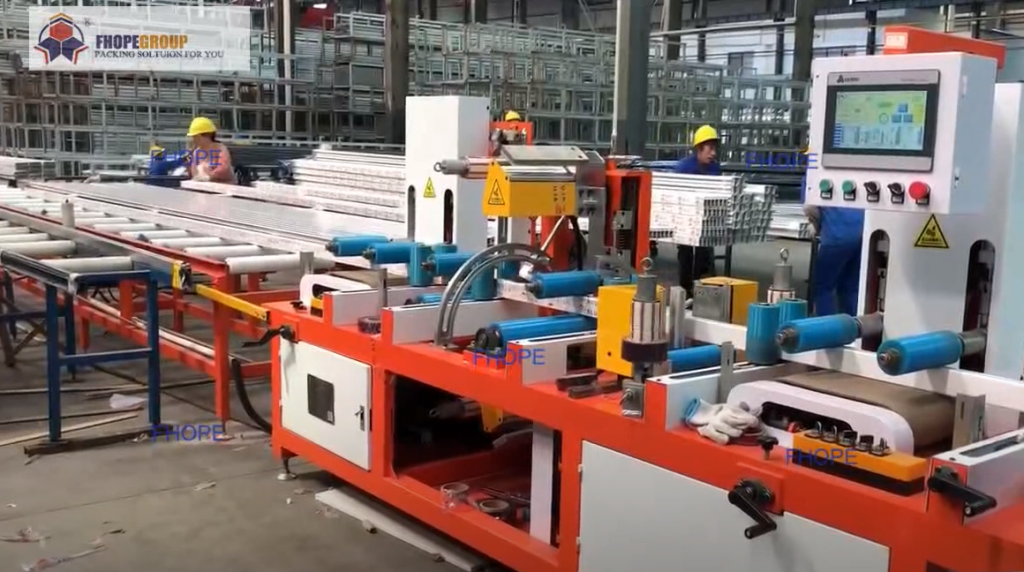
The machine stands between two roller tables. A sheet is laid on the infeed table and pushed forward into the machine. Inside the red frame, a pair of rubber rollers grips the sheet and pulls it through.
The film comes off a roll above the sheet, so it meets the face at the roller nip and is pressed on across the full width. On the other side, workers take the coated sheet off the outfeed table, and the film is cut between sheets.
Handwheels on top of the frame turn screws that set the gap and pressure of the upper roller for the sheet thickness. Both ends are set evenly, so the pressure is the same across the width. The line shown has two people at the infeed and one at the outfeed. It handles both bare stainless sheet and blue-filmed sheet.
Getting a flat, bubble-free film
Three settings decide whether the film goes on flat:
- Roller pressure. Too little leaves air bubbles. Too much can mark a soft surface or squeeze out the adhesive.
- Ketegangan dalam film. Too little lets the film wrinkle. Too much stretches the film, and it shrinks back later and lifts at the edges.
- Feed speed. The film and sheet must move at the same speed through the nip.
The sheet must be clean and dry. Dust under the film shows as a bump, and moisture weakens the adhesive.
Worked example: film for a 1,250 × 2,500 mm sheet
Illustrative job: stainless sheet 1,250 mm wide and 2,500 mm long. The film is 1,240 mm wide, so it stops 5 mm inside each edge. That keeps adhesive off the rollers and the edges clean, and no edge trimming is needed. 20 mm is lost at each cut.
| Memeriksa | Perhitungan | Hasil |
|---|---|---|
| Lebar film | 1,250 − 2 × 5 | 1,240 mm |
| Film length per sheet | 2,500 + 20 | 2.52 m |
| Film area per sheet | × 1.24 2.52 | ≈ 3.12 m² |
| Sheets per film roll of length R | R ÷ 2.52 | for a 1,000 m roll, ≈ 396 |
| Time per sheet at feed speed v | t = (2.5 + gap) ÷ v | from your machine speed |
Hasil. Each sheet takes 2.52 m of 1,240 mm film, about 3.12 m². A 1,000 m roll covers about 396 sheets. The sheet rate is set by the feed speed and by how fast the crew can load and unload, so a hand-fed line is often limited by handling rather than by the rollers.
After lamination
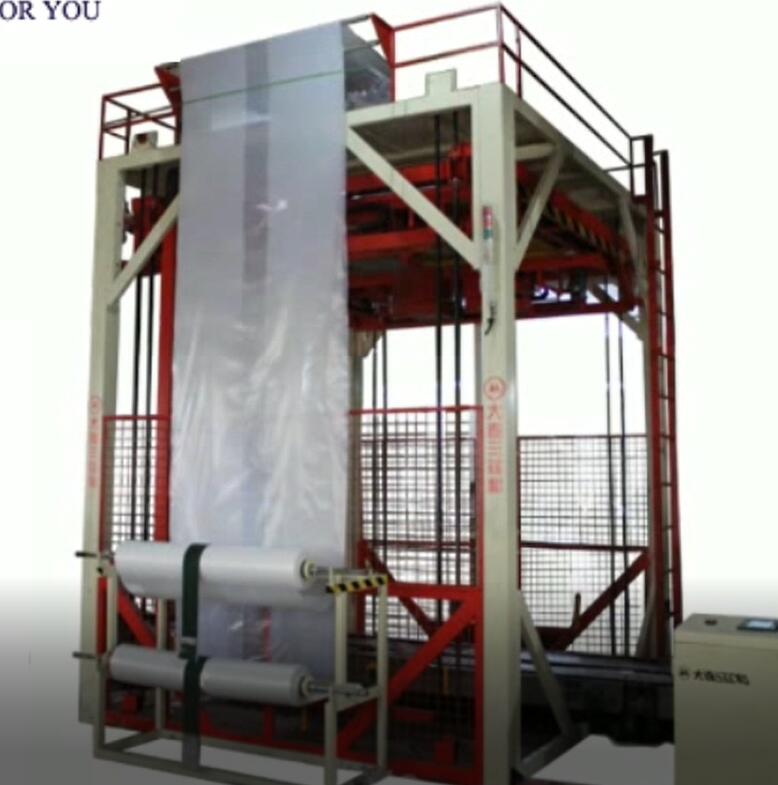
Coated sheets are stacked on a pallet with the film side protected, and the stack is strapped or wrapped for transport. Door panels can go on to a horizontal orbital wrapper with film or bubble film for shipping.
Daftar periksa pemilihan
- Sheet or panel width, length and thickness.
- Surface: polished, brushed, coated or wood.
- Film type, width and adhesion level.
- One side or both sides.
- Hand feeding or automatic feeding and stacking.
- Lembar per jam.
Keamanan: EN 415-10 dan ISO 12100
We design packing machines to EN 415-10 and assess their risks to ISO 12100. On a laminator, the main hazard is the in-running nip between the rollers, where fingers or gloves can be drawn in. The nip is guarded so fingers cannot reach it, and an emergency stop sits within reach of the infeed. Sheet edges are sharp, so the crew wears cut-resistant gloves.
Pertanyaan yang Sering Diajukan (FAQ) tentang Teknik
Q: Can it laminate both sides? A: Yes, with a second film roll and its own tension brake under the sheet, both faces are filmed in one pass.
Q: What thickness of sheet can it take? A: The handwheels lift the upper roller to suit the sheet. We set the roller travel to your thickest sheet or panel.
Q: How is the film cut between sheets? A: On a hand-fed line the crew cuts the film in the gap between sheets. An automatic cutter can be added for higher rates.
Q: Why does the film lift at the edges? A: Usually too much film tension, or a dusty or damp sheet.
Q: Which standard applies? A: EN 415-10 for packing machines, and ISO 12100 for the risk assessment.
Langkah selanjutnya
- Send sheet sizes, surface, film type and sheets per hour Kirimkan ke info@fhopepack.com.
- Kami cocok the laminator and the feeding.
- Kami membalas dalam waktu 24 jam dengan proposal dan penawaran harga.
Bacaan terkait
- Mesin aplikasi foil pelindung pada lembaran
- jalur pengemasan tali pengikat bundel lembaran baja
- Mesin pembungkus panel (produk)
- Automatic orbital stretch wrapper with bubble film for door panels
- Horizontal orbital ring stretch wrapper for sheet metal building materials
sumber
- The lamination line shown above
- FHOPE product page: panel wrapping machine
- Contoh soal: gambar ilustrasi
- Standar: EN 415-10; ISO 12100:2010
Terakhir ditinjau: 19-10-2026