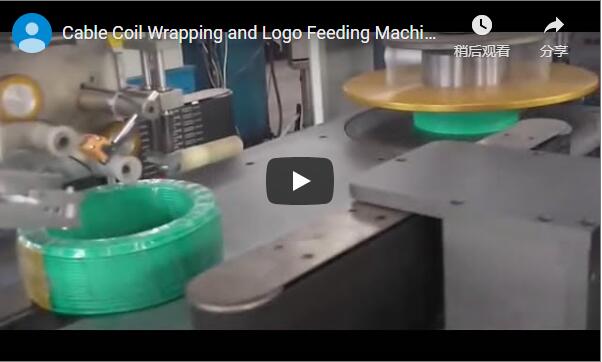
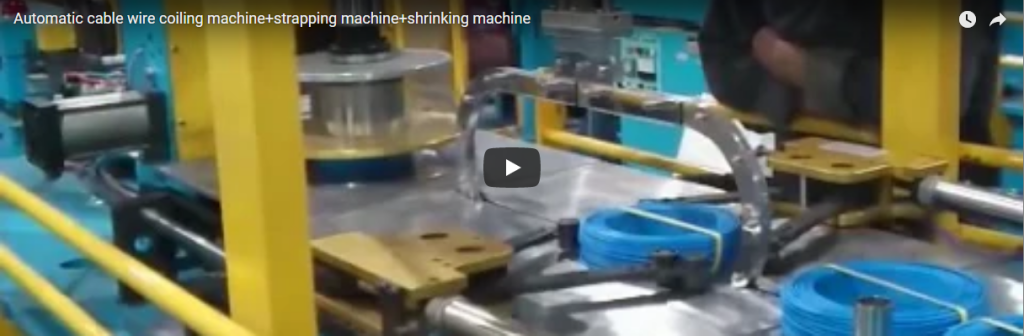
Ringkasan Eksekutif Preventing loose storage coils, jacket indentation and line bottlenecks needs exact tension and repeatable joint strength. An automatic cable strapping machine applies PET or PP strap at a set tension, typically 15 to 70 kg, in cycles around 15 to 30 seconds per coil, replacing variable manual strapping with repeatable PLC-managed cycles. The head feeds strap around the coil, tightens it, seals the ends and cuts the strap. This guide covers the cycle and the selection points.
Daftar Isi
- Apa yang dilakukan mesin itu
- Bagaimana siklus pengikatan berjalan
- Strap material and width
- Tension and sealing
- Coil dimension capacity
- Rentang spesifikasi tipikal
- Daftar periksa pemilihan mesin
- Dasar-dasar pengoperasian dan keselamatan
- Hal-hal penting dalam perawatan
- Pertanyaan yang Sering Diajukan (FAQ) tentang Teknik
- Langkah selanjutnya
- Bacaan terkait
- Sumber dan standar
Apa yang dilakukan mesin itu
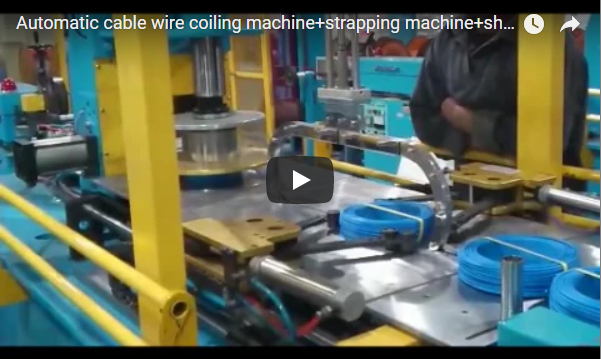
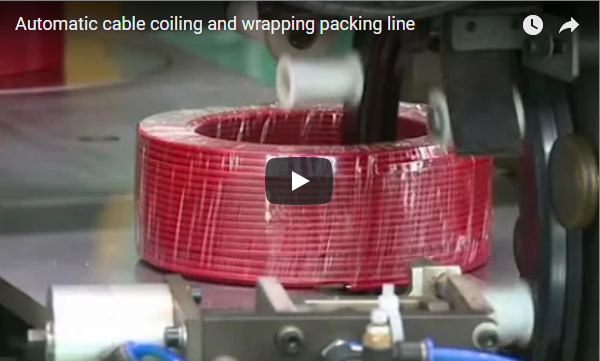
An automatic cable strapping machine secures cable and wire coils with a plastic strap before they go into shrink wrap, palletizing or storage. It is the same step that feeds a cable coiling, strapping and shrink packaging line. The cycle is fully automated, so every coil is strapped with the same strap position, tension and seal, without the operator handling the strapping tools.
That consistency is what sets automated strapping apart from the manual station. A coil strapped by hand varies in tension from strap to strap, which shows up as loose coils in storage or unraveling in transit. The machine removes that variation from the packaging step.
Bagaimana siklus pengikatan berjalan
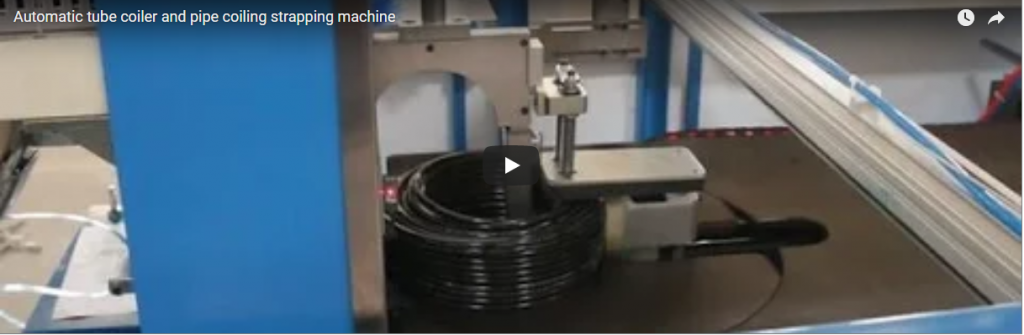
A coil arrives on the strapping station, positioned by the infeed conveyor and confirmed by sensors. The strapping head then feeds the strap around the coil circumference through its arched track.
The tensioning mechanism tightens the strap to a preset force, the overlapping ends are joined, and the strap is cut cleanly near the seal. The strapped coil is moved off the station onto the outfeed, ready for shrink wrapping or palletizing.
The whole cycle is managed by a PLC, so tension, strap count and timing are set as parameters and repeat identically for every coil.
Strap material and width
Two strap materials dominate cable packaging. PET, polyethylene terephthalate, holds its tension better and carries more load, which suits heavier coils and longer storage. PP, polypropylene, is the lighter everyday choice where retained tension matters less.
Common strap widths run from 9 to 19 mm, with thickness set by the strength the strap must deliver. For demanding loads, PET is the usual selection; the width and grade are confirmed against the coil weight per project.
Tension and sealing
Tension is the value that decides whether a coil stays secure or gets damaged. Too little tension and the strap slides on the cable jacket; too much and the strap presses into the jacket and deforms the coil.
Sealing joins the strap ends in one of two ways. Heat sealing melts the strap ends together, and friction welding vibrates the material to fuse it; friction welds commonly give higher joint strength with PET strap. Both are controlled by the machine, so the seal force does not depend on the operator.
Coil dimension capacity
The coil has to fit the machine in three directions: outer diameter, inner diameter and width. A coil that exceeds the station limits cannot be strapped in one pass, and a coil with a very large inner diameter may need the strap arch adjusted.
Those limits are confirmed per project against your coil sizes, as on a general mesin pengepakan koil kabel dan mesin pengepakan kawat. It is worth planning headroom: a slightly broader dimension range or faster cycle keeps the line usable as production grows.
Rentang spesifikasi tipikal
The values below are the published typical configuration of this machine. Confirm the exact numbers against your coil range per project.
| Barang | Spesifikasi |
|---|---|
| bahan tali | PET atau PP |
| Lebar tali | 9 hingga 19 mm |
| waktu siklus | 15 to 30 seconds per coil |
| Kisaran tegangan | 15-70 kg |
| Strap application | single or multiple straps per coil |
| kontrol | PLC dengan HMI |
| Jaringan | Profinet, Ethernet/IP and similar |
| Sealing | heat seal or friction weld |
Daftar periksa pemilihan mesin
Work through these points before you ask for a quote, and we confirm the rest against your cable line per project.
| Barang | Apa yang perlu dikonfirmasi per proyek |
|---|---|
| Gulungan | OD, ID and width ranges |
| Tali pengikat | material, width and joint strength needed |
| Beban | coil weight and retained tension target |
| Sepeda | coils per hour and straps per coil |
| Keluaran | strapped coil to shrink tunnel or palletizer |
| kontrol | PLC brand and automation network |
| Ruang utama | future size range and cycle targets |
A stand-alone strapping machine helps, but the throughput gain comes when it sits in the line. The infeed conveyor takes coils straight from the winder, and the outfeed hands the strapped coil to the shrink tunnel or palletizer, as on a cable coil rewinding, strapping and shrink packing line. On the control side, the PLC joins the plant network through Profinet or Ethernet/IP.
Dasar-dasar pengoperasian dan keselamatan
Start with the strap. Load the correct strap grade and width, confirm the arch matches the coil diameter, and set the tension and strap count for the recipe on the HMI.
The cycle positions the coil, lowers the hold-down, runs the strap mechanism, and ejects the strapped coil automatically, so operators stay clear of the strapping zone while it moves. Follow the lockout procedure before cleaning strap residue or adjusting the tensioning mechanism, and keep hands away from the strap feed while the head cycles.
Hal-hal penting dalam perawatan
Run the daily checks before the first shift. Confirm the strap path is free of debris, the seals have no strap jams, and the tensioning unit returns to zero between cycles.
Keep the strap guide track, the hold-down guides and the outfeed rollers clean and lightly lubricated per the manual. Watch for strap scraps building at the cutting and sealing station, and check the seals visually on the first coil of a batch before running the full lot.
Pertanyaan yang Sering Diajukan (FAQ) tentang Teknik
Q: What strap material does the machine use? A: PET or PP strap is standard, at published widths from 9 to 19 mm, with the grade set against the coil weight per project.
Q: How fast does one coil strap? A: The published typical cycle is 15 to 30 seconds per coil, depending on coil size and strap count.
Q: How is the strap tension set? A: The tension mechanism tightens to a preset force, typically within a 15 to 70 kg range, programmed on the PLC.
Q: How are the strap ends joined? A: By heat sealing or friction welding, both controlled by the machine for a repeatable seal; friction welds commonly give higher joint strength with PET.
Q: What is the risk of setting incorrect tension? A: Tension too low lets the strap slip along the cable jacket, while tension too high deforms the coil and presses into the jacket.
Q: Which sealing method gives stronger joints with PET? A: Friction welding commonly provides higher joint strength than heat sealing when using PET strapping.
Q: Can the machine apply more than one strap per coil? A: Yes. Single straps suit compact, lightweight coils, while multiple radial straps are set for larger coils or packages subject to shifting in transit; the count is per project and held in the recipe.
Q: Does the machine connect to the plant network? A: The strap machine’s PLC integrates with factory automation networks such as Profinet and Ethernet/IP for recipes and diagnostics.
Langkah selanjutnya
- Email us at info@fhopepack.com with your coil sizes, strap and cycle target.
- We send a layout drawing and a strapping proposal within 48 hours.
- We arrange a site survey to confirm the infeed, outfeed and control network before installation.
Bacaan terkait
- Mesin pengikat lembaran baja
- Hose pipe wrapping machine for steel coil packing
- Mesin pembungkus peregang gulungan dan kumparan
- Pembungkus orbital horizontal otomatis untuk cakupan penuh dalam satu kali lintasan.
- Lini produk mesin pengemasan FHOPE
Sumber dan standar
- ISO 12100:2010 — Keselamatan mesin. Prinsip umum untuk desain, penilaian risiko, dan pengurangan risiko.
- EN 415-10:2014 — Keselamatan mesin pengemas. Persyaratan umum
- EN ISO 13849-1:2023 — Keselamatan mesin. Bagian-bagian sistem kendali yang berkaitan dengan keselamatan.
- FHOPE automatic cable strapping machine demonstration video, YouTube.
Terakhir ditinjau: 09-10-2026