How a V Cradle Centres a Load Without Clamps
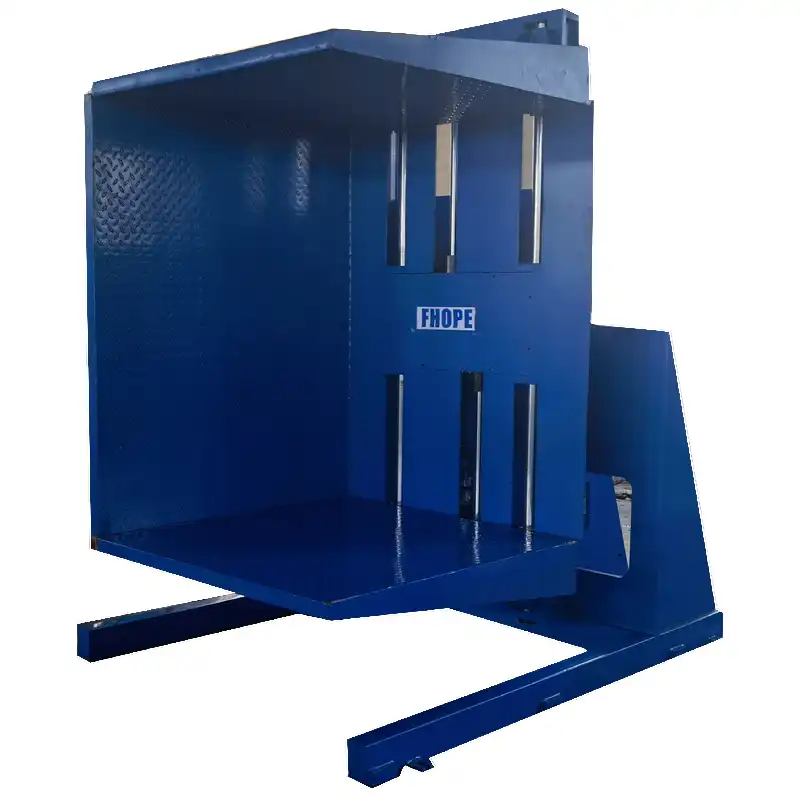
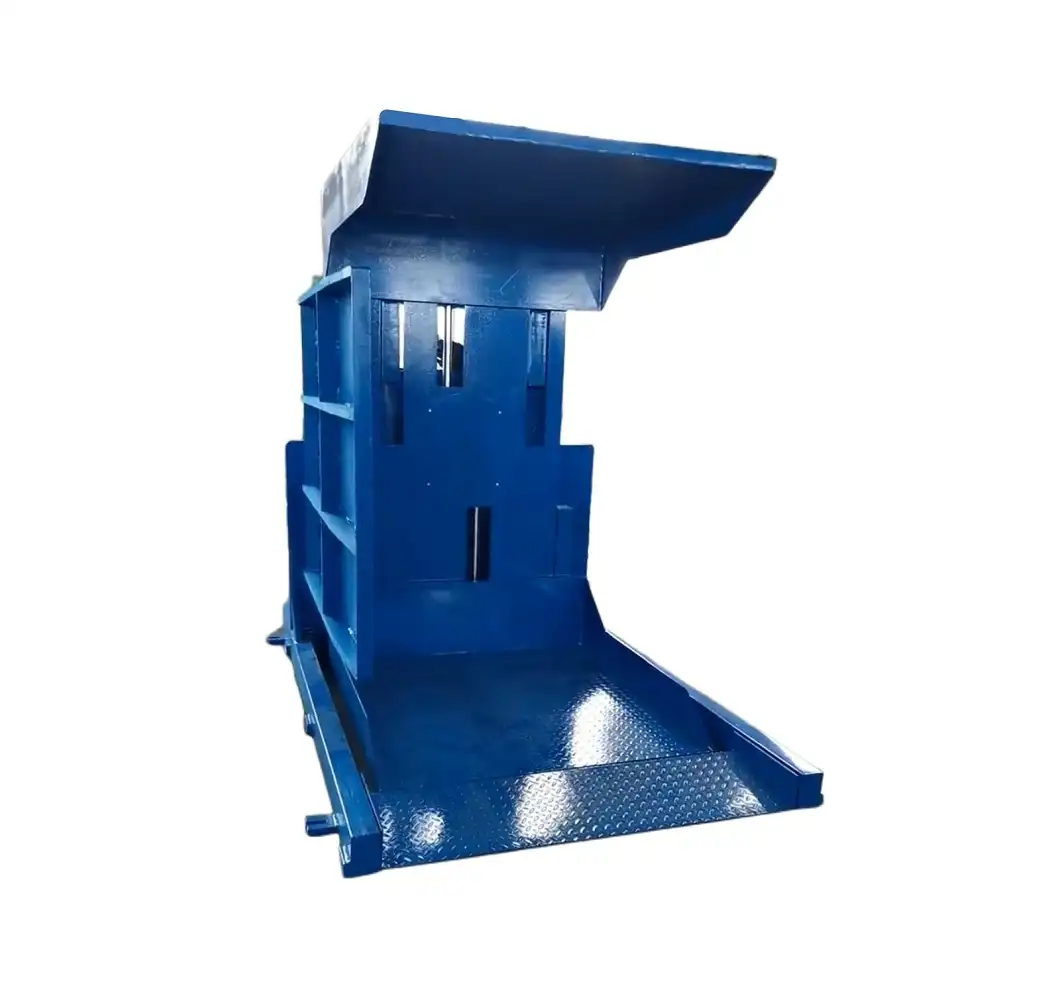
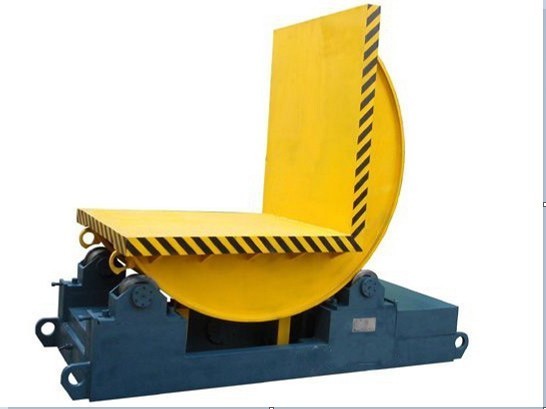
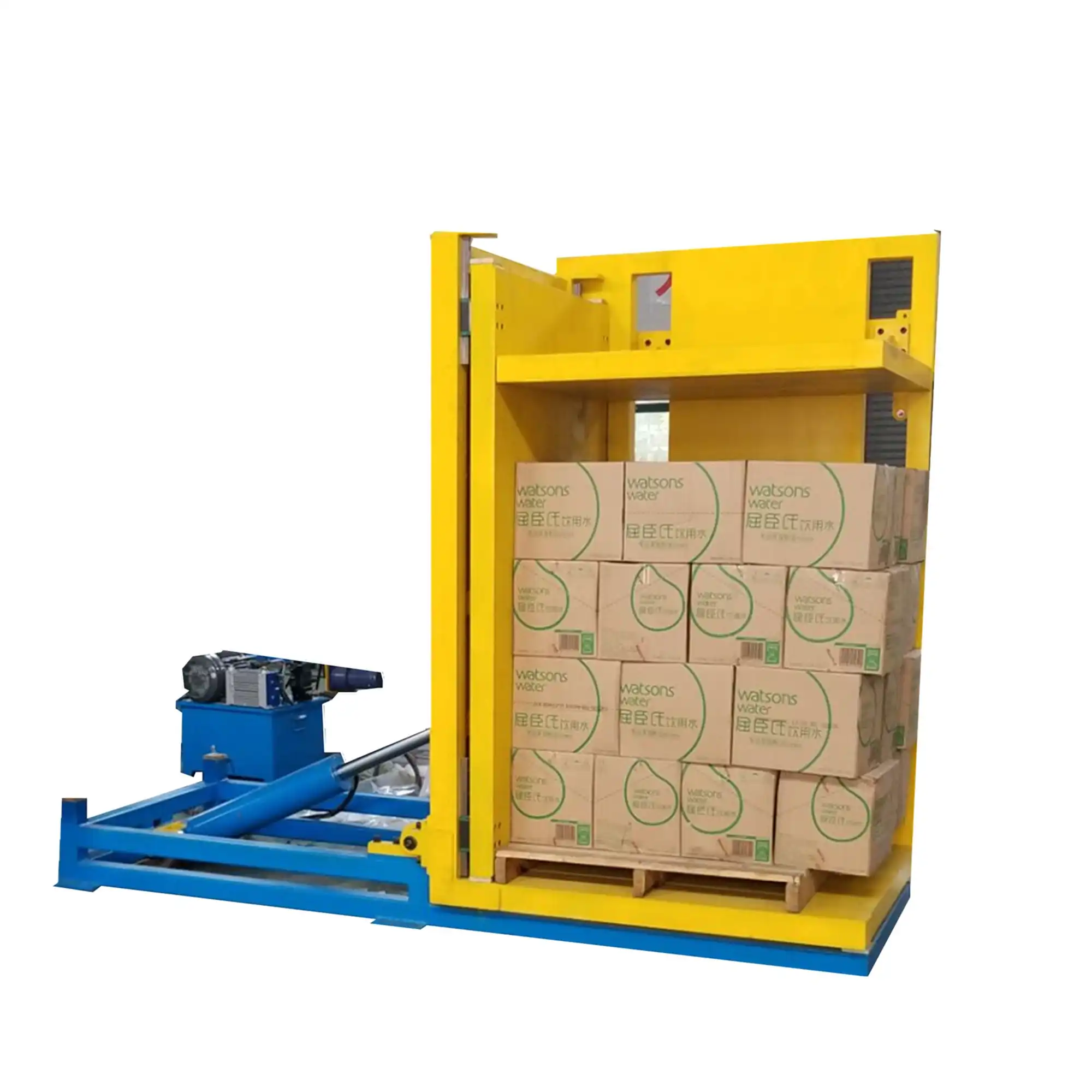
A symmetric V cradle aligns an unclamped cargo stack by resolving gravitational acceleration along two mutually orthogonal planes inclined forty-five degrees from horizontal. As the payload settles into the cradle root, bilateral reaction forces guide the bottom corners toward the central intersection, securing alignment without external pressure.
The centering effect is governed by vector mechanics on dual inclined surfaces. When an incoming load enters the ninety-degree V-shaped pocket, the gravitational force vector F_g = m × g splits into two perpendicular normal components. Each cradle wing generates a normal reaction force N_1 = m × g × cos(45°) and N_2 = m × g × sin(45°).
Because both surfaces slope toward the central apex at identical inclinations, any lateral displacement generates an asymmetric force differential:
Lateral restoration force:
F_restore = m × g × (sin(45° + θ) - sin(45° - θ)) × cos(45°) = 1200 × 9.81 × 0.052 × 0.707 = 432.7 N (example only).
This restoring vector continuously overcomes interface friction, drawing the lowest packaging tier inward until the centerline of cargo mass coincides exactly with the machine apex.
Commissioning teams verify load self-centering using mechanical indicators on the trial floor. Position an optical laser emitter along the central weld seam of the cradle apex. Lower a test pallet carrying maximum rated volume into the bay. Measure the lateral offset between the pallet center scribe line and the laser beam using a calibrated vernier caliper:
-
The lateral offset between the pallet center scribe and the cradle apex must not exceed 3.0 mm across the entire length of the support plate.
What Tilt Angle Holds a Stack Without Sliding
A tilt angle safely supports an unstrapped cargo stack when the operating inclination remains below the static friction angle between stacked layers. Tilting shifts load weight onto the perpendicular cradle wing before interfacial shear overcomes the static friction coefficient, preventing layer displacement during rotation.
Column integrity during side rotation relies on the balance between shear force and normal force. For any cargo tier resting at an angle α relative to horizontal, the sliding shear force acting down the deck is F_s = m × g × sin(α), while the maximum static resisting friction is F_f = μ_s × m × g × cos(α). Slipping begins the exact instant the tangent of the tilt angle exceeds the static friction coefficient μ_s:
Critical slip angle threshold:
α_crit = atan(μ_s) = atan(0.38) = 20.81° from horizontal base orientation (example only).
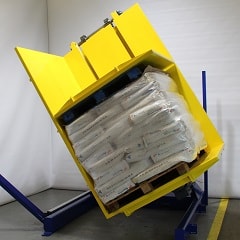
When the cradle rotates past twenty degrees, unconstrained cartons would slide off a single flat platform. However, the orthogonal cradle wing, positioned at ninety degrees to the base, intercepts this shifting mass. As α increases from zero to ninety degrees, normal force transfers smoothly from deck one to deck two according to N_2 = m × g × sin(α), transforming sliding shear into compressive load against the structural backplane.
Field technicians evaluate inter-tier displacement during machine site acceptance tests:
-
Rotate the cradle assembly to an intermediate hold position of thirty degrees and hold the load static for sixty seconds.
-
Measure relative tier displacement across carton rows using a steel straight edge and depth micrometer; cumulative tier step-out must not exceed 2.0 mm.
Why Square Pallets Sit Differently in a V
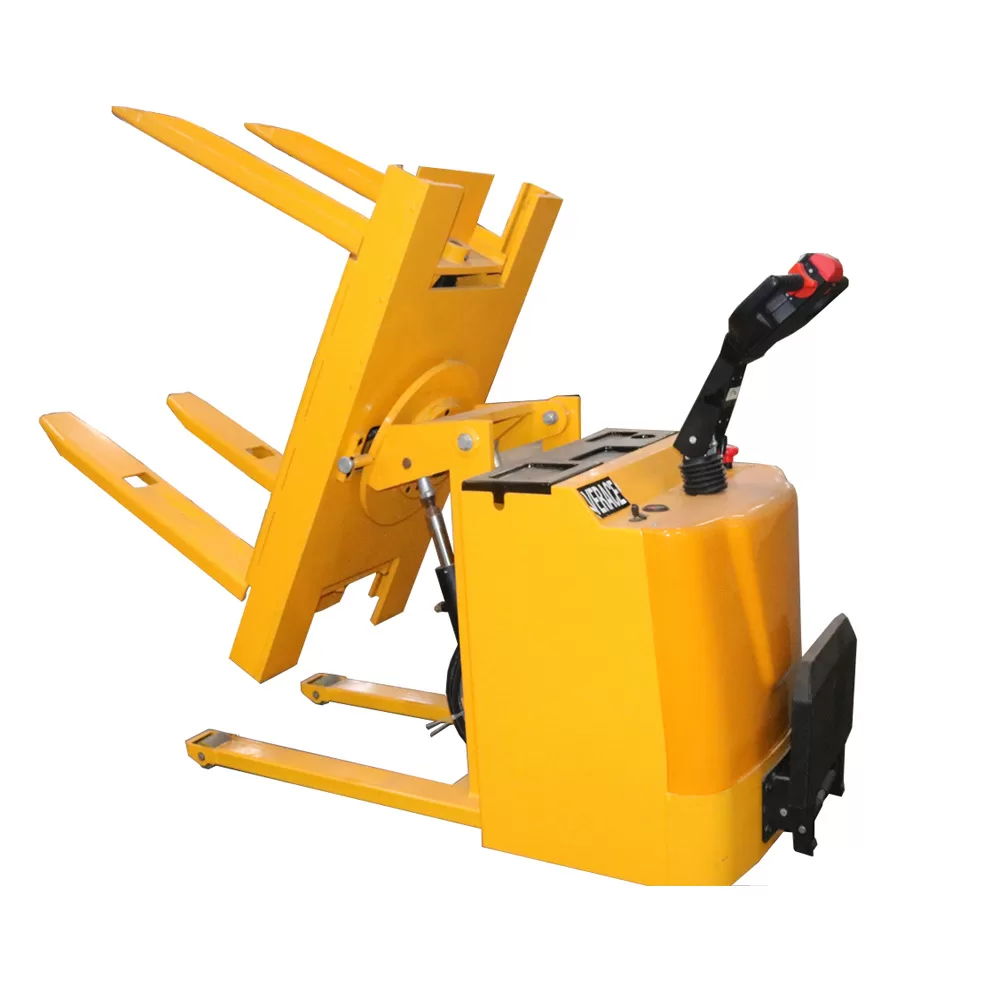
A square pallet maintains an identical center of gravity whether loaded along its length or width, generating symmetric torsional load during tilting. A rectangular pallet shifts its mass center depending on orientation, introducing an eccentric lever arm that alters torque requirements and bearing wear on the pivot.
When a square platform rests in the cradle, its center of mass aligns with the vertical bisector plane of the ninety-degree frame. The radial distance from the main hinge pin to the cargo centroid remains constant throughout the tilting sweep. In contrast, a rectangular base placed with its long side vertical shifts the centroid away from the pivot, altering the dynamic torque curve:
Dynamic pivot torque equation:
T_pivot = m × g × [r_x × cos(α) + r_y × sin(α)] + I_rot × αα = 1500 × 9.81 × [0.45 × cos(45°) + 0.60 × sin(45°)] = 10,924 N×m (example only).
This eccentric offset increases bending moments on the main rotary bearings by up to twenty-eight percent.
Plant engineers must establish loading orientations based on pallet aspect ratios. Inspect incoming pallets with a steel tape rule:
-
If length exceeds width by more than 100 mm, mandate loading with the longer dimension resting flat against the primary base plate to minimize the centroid radius r_y.
-
Measure runner parallel clearance against the side frame stops; total clearance must not exceed 10.0 mm.
-
Monitor hydraulic line pressure gauges during the initial test stroke; pressure spikes must remain below fifteen percent of normal operating relief pressure.
How Much Misalignment a V Cradle Absorbs
A V cradle absorbs operator misalignment through mechanical lead-in chamfers on its front guide fenders. These angled wear plates can correct up to sixty millimeters of lateral entry offset and up to four degrees of angular yaw as the pallet truck advances into the loading station.
The mechanical self-alignment process converts the forward kinetic momentum of the pallet truck into transverse sliding displacement. When an operator drives a load off-center, the leading corner of the bottom pallet strikes the lead-in flare at an approach angle β. The corrective lateral force is a function of forward thrust and entry geometry:
Lateral wedge correction:
If the entry yaw angle exceeds five degrees, the pallet runner contacts the frame perpendicularly, causing edge gouging rather than smooth translation.
Maintenance technicians should audit incoming approach tolerances using the following field checklist:
-
Measure the clear width between entry flared guides; opening must provide 120 mm total clearance over nominal pallet width.
-
Verify that front lead-in wear plates retain a minimum thickness of 8.0 mm with no sharp burrs, deformation, or cracked anchor bolts.
-
Mark guide lines on the floor slab starting 1500 mm in front of the bay, enforcing a maximum allowable vehicle deviation of 25.0 mm from center.
What Friction the Cradle Needs to Work
The contact plates of a V cradle require a controlled static friction coefficient between 0.30 and 0.45 against base pallet wood. Lower friction causes rapid sliding and shock loads during rotation, while excessive friction prevents the load from sliding into the cradle root.
The contact interface between pallet timber and the steel machine deck defines system dynamics. If smooth mill-finish steel is contaminated with machine oil, the static friction coefficient μ_s drops below 0.18, causing the load to slide prematurely during initial rotation. Conversely, aggressively knurled steel elevates friction above 0.55, arresting the natural gravitational descent of the pallet into the apex pocket.
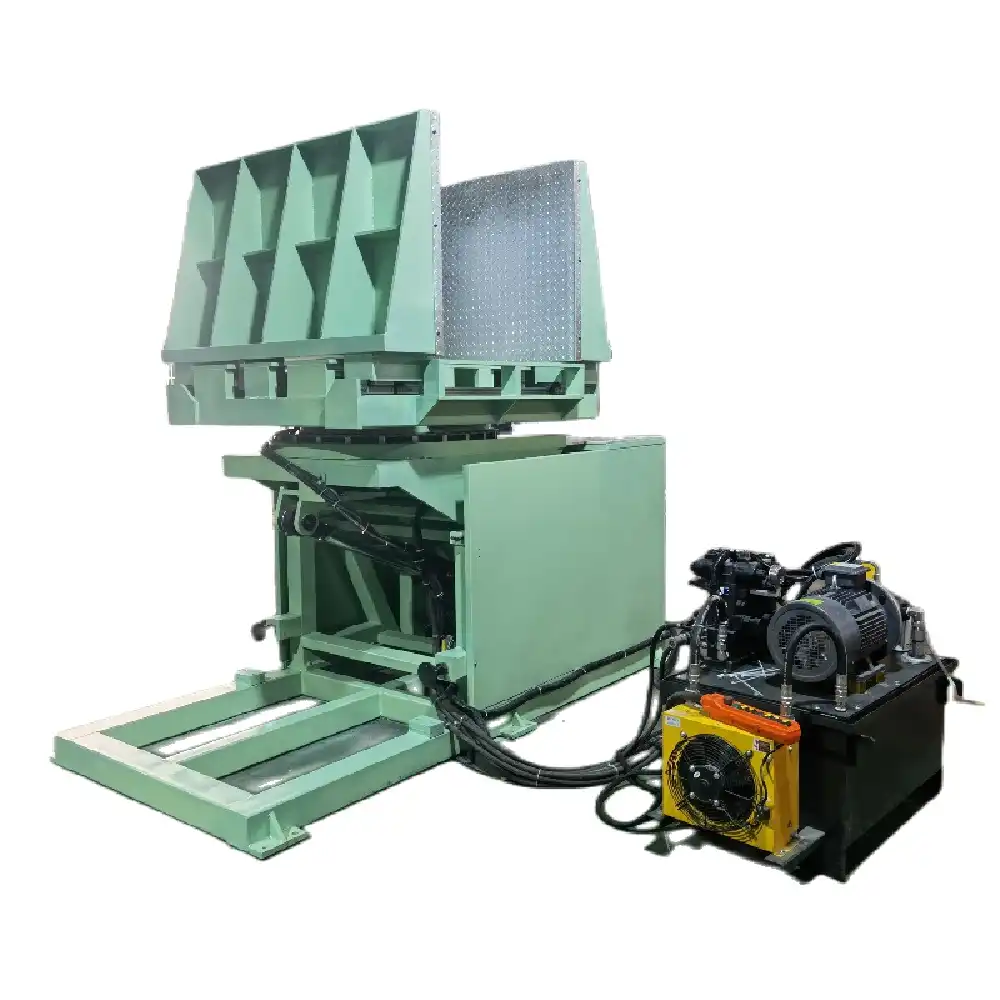
Cylinder holding thrust during mid-rotation must balance these sliding forces:
Cylinder holding balance equation:
F_cyl × L_arm = m × g × [R × sin(α) - μ_s × R × cos(α)] = 1400 × 9.81 × [0.55 × sin(60°) - 0.35 × 0.55 × cos(60°)] = 5218.4 N×m (example only).
Maintaining dry contact ensures that the transfer from bottom deck to side wing proceeds smoothly without stick-slip vibration.
Friction Regimes on Cradle Plates:
Operations personnel should check surface friction characteristics across the machine decks:
-
Inspect deck plating daily for hydraulic fluid leaks, washdown residue, or pallet wood dust buildup.
-
Test plate roughness using a surface profile gauge; root-mean-square roughness Ra must remain between 6.3 and 12.5 micrometers.
-
Degrease steel deck plates immediately with an industrial non-chlorinated solvent if oil traces appear near pivot bearings.
How the Exchange Happens at an Angle
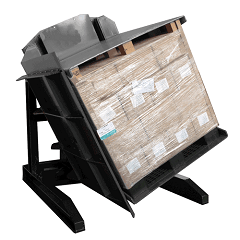
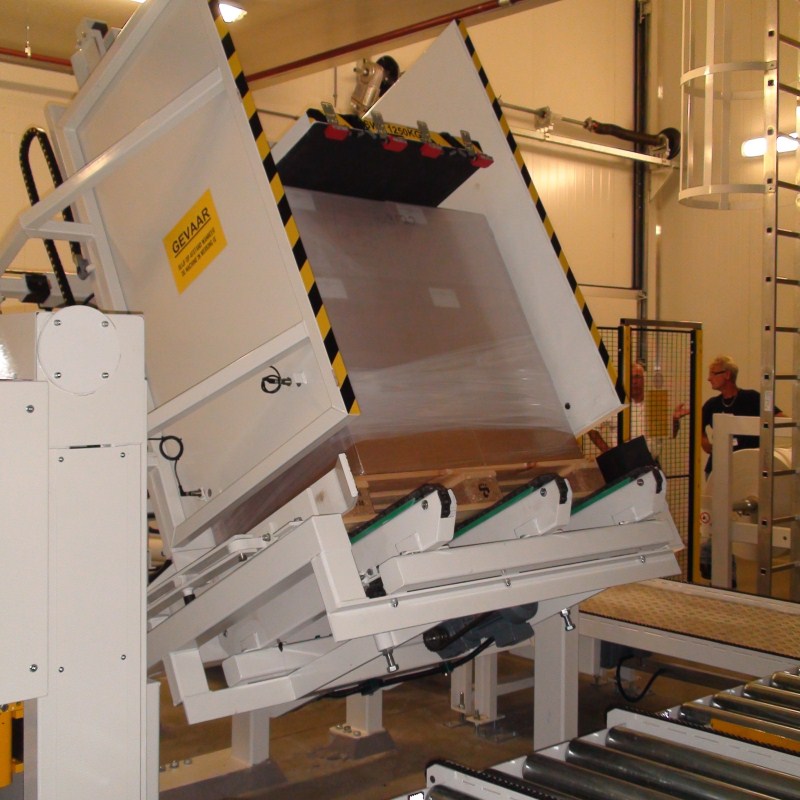
Pallet exchange at a ninety-degree angle eliminates compressive load from the base pallet by rotating the cargo mass entirely onto the cradle side flank. With the bottom pallet oriented vertically and bearing zero payload weight, an operator can safely withdraw and replace it.
When the cradle reaches its ninety-degree side-tilt limit, the entire gravitational mass of the stacked goods rests squarely against the heavy structural side wing. The original wooden pallet is retained only by its own mass and secondary friction clips. Because vertical compression on the pallet top deck drops to zero, the frictional retention force holding the pallet drops proportionally:
Retaining extraction force:
F_extract = m_pallet × g × μ_guide = 35 × 9.81 × 0.25 = 85.8 N (example only).
The operator slides the empty platform horizontally out of its pocket along low-friction guide tracks without disturbing the stacked cargo.
Load Supported Fully on Side Wing:
Quality inspectors audit the pallet extraction envelope at the full tilt position:
-
Measure the physical clearance gap between the bottom tier of cargo and the wooden top deck of the tilted pallet using a feeler gauge; the gap must measure between 5.0 and 15.0 mm across the entire deck area.
Which Loads Slide in a V Cradle
Flexible, low-friction, or bulk-fluid containers slide unpredictably inside a V cradle when lateral shear stresses overcome the internal cohesion of the cargo stack. Bagged powders, unstrapped slick plastic containers, and poorly wrapped tiers deform under ninety-degree rotation, shifting the stack centroid.
Internal cargo shear stability depends on the internal friction angle φ of the bulk goods and the hoop strength of the exterior stretch film. When bagged resins or powdered minerals rotate ninety degrees, the contents behave like granular media, generating active lateral thrust against the outer containment walls:
Lateral granular thrust force:
F_thrust = 0.5 × gamma × H² × K_a = 0.5 × (8500 N/m³) × (1.6 m)² × tan²(45° - 28°/2) = 3918.4 N/m of wall (example only).
If this internal lateral thrust exceeds the elastic yield limit of the stretch film wrap, the stack bulges outward, shifting the center of gravity and causing the upper packaging tiers to slip out of column alignment. Conversely, rigid corrugated boxes containing glass bottles possess high shear modulus, transferring lateral loads cleanly into the side cradle wing without internal buckling.
Internal Granular Shear Failure:
Engineers verify cargo stability before approving new stock-keeping units for angled transfer:
-
Perform a prototype tilt test: halt the cradle rotation at forty-five degrees and measure stack lateral deflection at mid-height with a plumb rule; deflection must remain below 25.0 mm.
-
Inspect inter-tier friction sheets; smooth plastic slip sheets must be replaced with high-friction micro-embossed paper boards showing a static friction coefficient μ_s ≥ 0.50.
What to Measure on a Pallet Before the Quote
Procurement engineers must document bottom deck board coverage, stringer notch dimensions, total pallet height, and overhang dimensions before requesting equipment engineering quotes. Non-standard bottom board arrangements interfere with ground-level pallet truck entry and distort cradle apex seating.
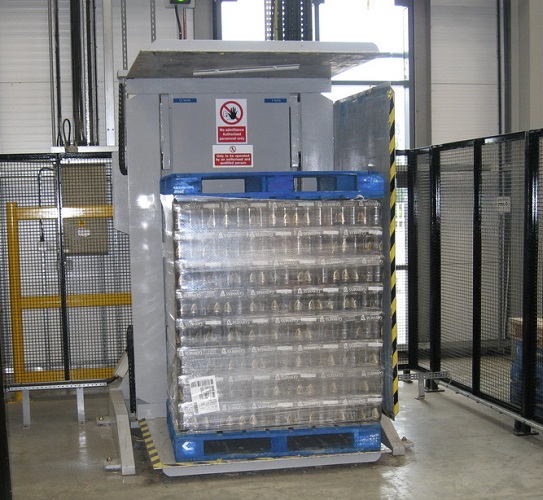
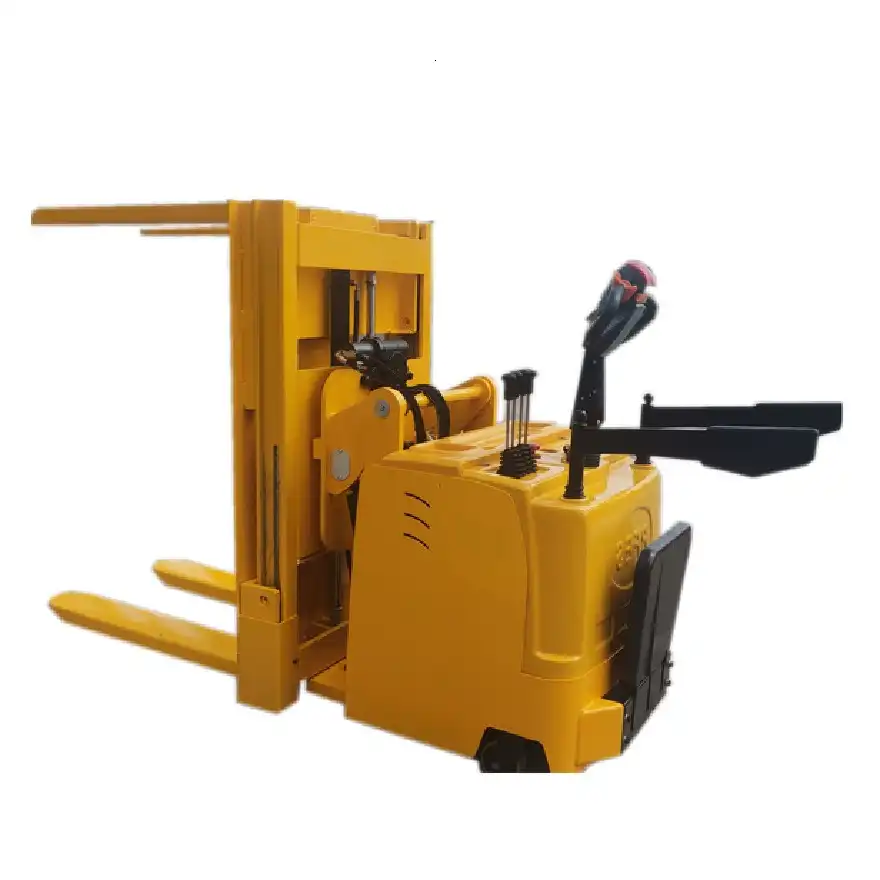
A V-shape changer relies on direct ground-level entry and precise geometric corner contact. Pallets with bottom perimeter boards or missing runner chamfers will snag on entry ramps, preventing smooth entry by hand pallet trucks. Furthermore, load overhang alters the contact point against the cradle wings, shortening effective support height:
Structural deflection allowance on bottom deck overhang:
delta_over = fracw × L_over^48 × E × I_board = frac1800 × (0.075)^48 × (1.1 × 10^10) × (1.42 × 10^-7) = 0.0045 mm (example only).
Key Pallet Measurement Points:
Complete this technical measurement verification checklist before finalizing equipment configurations:
-
Measure overall pallet length, width, and height across twenty production samples; record minimum, maximum, and average values to determine cradle throat dimensions.
-
Record fork opening clearance: verify that the opening height between top deck and bottom runner exceeds 90.0 mm to clear pallet truck entry rollers.
-
Inspect bottom deck board configuration: confirm whether the pallet is open-bottomed (euro-style) or closed-perimeter (cross-board base).
When a Flat Deck Beats a V Cradle
A flat deck transfer system is superior to a V cradle when handling open containers, unsealed liquids, or ultra-fragile goods that cannot tolerate ninety-degree side reorientation. Horizontal pushing mechanisms maintain true vertical alignment throughout the cycle, eliminating shear loads entirely.
The selection boundary between a V cradle and a flat deck depends on product fragility, fluid boundaries, and cycle speed requirements. A V-shape system offers outstanding cost-efficiency, mechanical simplicity, and ground-level hand truck access without requiring overhead clamping. However, if goods contain open top containers, unsealed food trays, or loose cylindrical components, tilting by ninety degrees will spill contents or misalign layers.
Apply these operational guidelines when selecting machinery:
-
Choose a V cradle if packages are sealed and stable, load height varies widely between cycles, and loading must be performed using manual hand pallet trucks without forklift staging.
-
Choose a flat deck system if inventory includes open liquid vats, low-shear plastic containers, or fragile components that cannot support lateral compressive forces.
-
Verify that incoming pallet loads possess an internal shear angle exceeding thirty degrees before approving 90-degree side tilt processing.
For detailed equipment dimensioning and comprehensive application engineering assessments, consult with the technical engineering department at www.fhopepack.com.