Executive summary A steel coil has no flat face to stand on and every reason to roll. A coil tilter rotates a coil between vertical, eye-to-sky storage and horizontal, eye-to-wall processing on a cradle, so you never drag, tip or sling a multi-ton coil through the turn. Load capacity, cradle shape and tilt angle are configured per project.
Inhaltsverzeichnis
- The turning problem
- Was ein Coil-Tilt-System leistet
- Cradle designs
- Where it fits the line
- Kernkomponenten
- Typische Konfiguration
- Zyklus und Steuerung
- Auswahl-Checkliste
- Kontrollen und Sicherheit
- Häufig gestellte Fragen zur Technik
- Nächster Schritt
- Verwandte lesen
- Quellen und Standards
The turning problem
Coils are stored with the eye vertical to take less floor space, and processed with the eye horizontal so the strip can be paid off to a slitter or uncoiler. Between those two positions sits the dangerous part of the job.
Tipping a coil with a crane and slings means swinging a cylindrical load that can slip mid-air. A coil tilter carries the coil in a cradle through the same turn under power, with the coil supported at every point of the rotation.
Was ein Coil-Tilt-System leistet
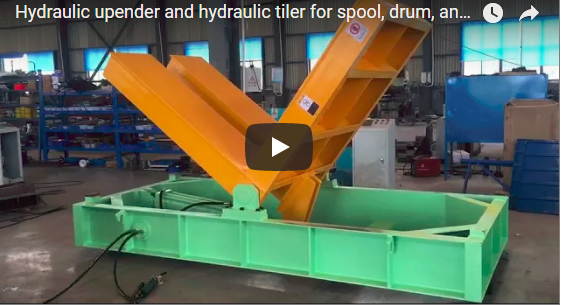
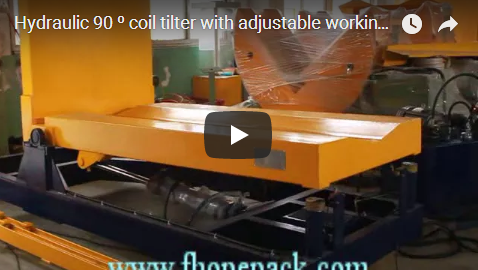
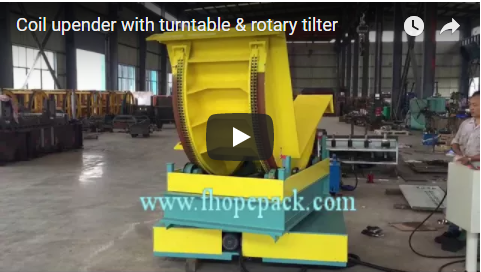
A steel coil tilter, also called an upender or downender, rotates a coil through 90 degrees between the eye-to-sky and eye-to-wall positions. The turn happens on a controlled cradle, not at the end of a chain.
The same unit works in both directions, so a coil can arrive vertical and leave horizontal, or the reverse.
Cradle designs
| Hülle | Arbeiten jederzeit weiterbearbeiten können. Jede Präsentation und jeder KI-Avatar, den Sie von Grund auf neu erstellen oder hochladen, |
|---|---|
| V-Sattel | holds round coils without marking the edge |
| Flache Plattform | for coils that already sit on a flat or palletized base |
A V saddle cradles the coil round shape and keeps it centered through the turn; we select the cradle from the coil diameter and banding.
Where it fits the line
- Metal service centers: orienting coils for slitting, cutting or delivery.
- Stamping shops: feeding coils to presses and processing lines.
- Warehousing and logistics: turning stored coils for loading.
- End-of-line packaging: turning coils before strapping or stretch wrapping.
On an automated line the tilter can sit between the coil storage rack and the wrapping or slitting station, with conveyors feeding it in and out.
Kernkomponenten
| Komponente | Funktion / Rolle (Role) * |
|---|---|
| Grundrahmen | anchors the unit and carries the load |
| Rotating cradle | holds the coil through the tilt |
| Antrieb | rotates the cradle under power |
| Bedienfeld | pendant or push-button operation |
| Optionen | powered rollers, weighing, custom cradle |
Typische Konfiguration
Die folgenden Angaben stellen gängige Ausgangswerte für diese Maschinenklasse dar und werden projektbezogen bestätigt.
| Parameter | Typischer Bereich, je nach Projekt bestätigt. |
|---|---|
| Tragfähigkeit | 1 t up to several tens of tonnes, sized to the coil |
| Neigungswinkel | 90 degrees as standard; other angles on request |
| Tilt cycle | rotational speed adjusted to coil weight and line pace |
| Hülle | V saddle or flat platform, sized to coil diameter |
| Antrieb | electro-mechanical or hydraulic, selected per project from duty cycle and coil tonnage |
| Stromversorgung | 220 V einphasig oder 380 V dreiphasig, je nach Projekt für die Anlagenversorgung ausgewählt |
Zyklus und Steuerung
The operator places the coil in the cradle, then drives the tilt from the control panel. The cradle moves through the set angle under power, holds at the end of travel, and the coil is removed or carried to the next station.
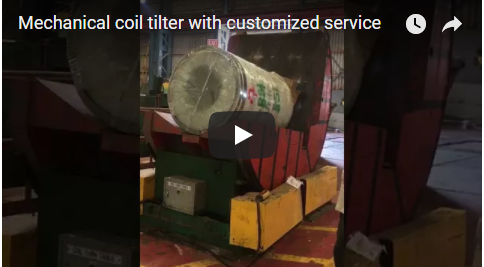
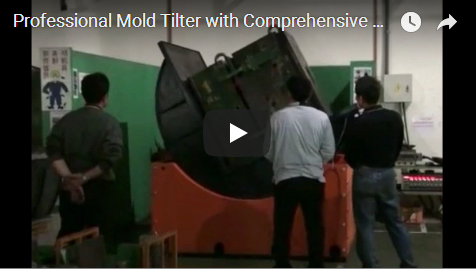
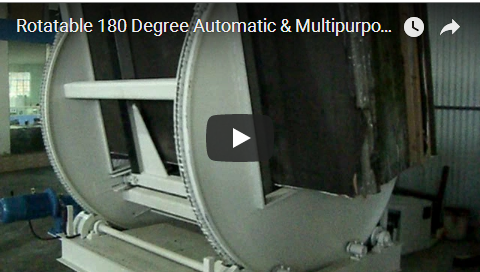
Our footage shows this turn on a strapped coil in a mill setting; it is a general demonstration, so capacity, cradle size and tilt speed for your coils are confirmed with us per project. A full 90-degree tilt typically runs in a 40 to 90 second cycle, adjustable for coil weight and drive, and is confirmed per project.
Auswahl-Checkliste
| Frage | Bestätigung pro Projekt |
|---|---|
| Schwerste Spule | Nenntragfähigkeit |
| Spulendurchmesser und -breite | cradle size and saddle shape |
| Drehrichtung | upender, downender or bidirectional, selected per project from process flow |
| Linienplatzierung | conveyor feed and discharge integration |
| Fahrwahl | elektromechanisch oder hydraulisch |
| Stromversorgung | Spannung, Phase und Frequenz vor Ort |
Kontrollen und Sicherheit
Operation is from a pendant or push-button panel with start, stop, tilt forward and reverse, and an emergency stop. Keep the area clear while the cradle moves, keep the coil centered in the saddle, and stay inside the rated capacity. Routine checks cover cradle condition, drive and the safety devices, per the machine manual.
Häufig gestellte Fragen zur Technik
Q: Can it tilt more than 90 degrees? A: Yes. While 90 degrees is standard, custom tilt angles are available on request and confirmed per project.
Q: V saddle or flat platform? A: A V saddle suits round coils; a flat platform suits coils on a flat or palletized base. We select from your coil shape per project.
Q: Is the cycle automatic? A: The tilt is driven from the control panel, and it can run inside an automated line with conveyor feed; the level of automation is set per project.
Q: Does the tilter weigh the coil? A: Yes, as an option. Integrated load-cell weighing can be added, and the base frame is sized to the rated load per project.
Q: What capacity range is available? A: From about 1 t up to several tens of tonnes; the cradle and drive are sized to your heaviest coil per project.
Nächster Schritt
- Email us at info@fhopepack.com with your coil weights, diameters and line layout.
- We send cradle sizes, drive options and a layout drawing within 48 hours.
- We arrange a site survey to confirm the tilter fits your mill bay.
Verwandte lesen
- Coilkipper und Coilwender
- Automatischer und vielseitiger Kippmechanismus für Kisten
- Professioneller Formenkipper mit umfassendem technischem Support
- FHOPE Verpackungsmaschinen-Produktlinien
Quellen und Standards
- ISO 12100:2010 – Sicherheit von Maschinen. Allgemeine Grundsätze für die Konstruktion, Risikobewertung und Risikominderung
- EN 415-10:2014 — Sicherheit von Verpackungsmaschinen. Allgemeine Anforderungen
- EN ISO 13849-1:2023 — Sicherheit von Maschinen. Sicherheitsrelevante Teile von Steuerungssystemen
- FHOPE steel coil tilter demonstration video. Reviewed as a general demonstration; capacity, cradle and cycle confirmed per project.
Letzte Überprüfung: 21.09.2026