ملخص تنفيذي
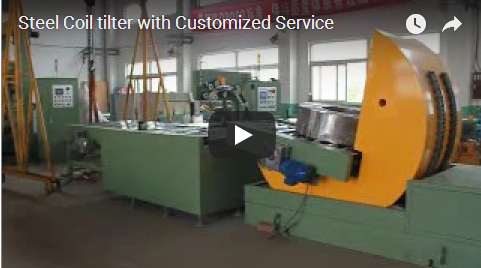
Coils leave the line standing upright and need to be tipped onto their side before packing, which is heavy and risky work by hand. This hydraulic 90° coil tilter turns an empty working table from vertical to horizontal in a smooth powered stroke, driven by a hydraulic system on a blue base frame. We build hydraulic coil tilters that tip a vertically placed coil onto its side in a single controlled rotation. Coil size, weight and cycle requirements are confirmed per project.
جدول المحتويات
- Why coils need mechanical tilting
- ماذا تفعل الآلة
- The 90 degree stroke
- A tilter in the line
- ما تُظهره اللقطات
- تكوين نموذجي
- قائمة التحقق من الاختيار
- التشغيل والسلامة
- أسئلة وأجوبة هندسية
- الخطوة التالية
- القراءة ذات الصلة
- المصادر والمعايير
Why coils need mechanical tilting
Coils are commonly built and stored on their face, and packing a coil usually needs it on its side. Tilting a heavy coil by hand is slow, takes two or more people, and risks the coil tipping out of control.
A tilter does the rotation under power, so the coil is turned smoothly and stops level every time. The coil size and weight carried by the table are confirmed per project.
ماذا تفعل الآلة
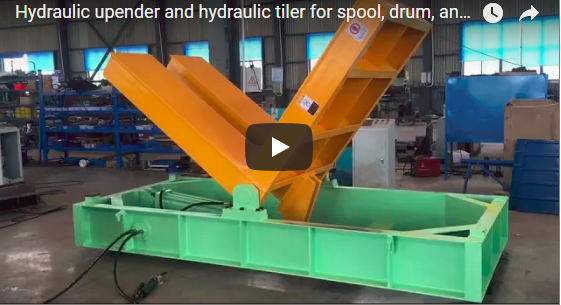
The machine is a hydraulic coil tilter with an adjustable working table. The table is a rectangular platform that stands vertical for loading, then swings down through 90 degrees until it rests level. The rotation comes from a hydraulic system on a blue base, with the cylinders and guide rails doing the work.
The vertical position suits a coil arriving on its face, and the level position puts it ready for the next step. Table size and tilt capacity are confirmed per project.
The 90 degree stroke
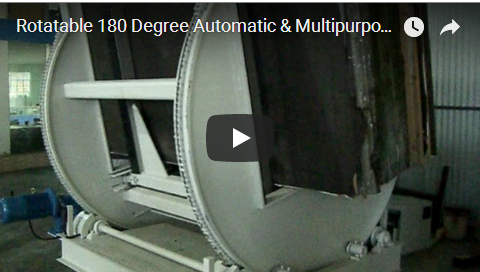
The footage shows the tilter moving from vertical to level in one smooth stroke: the table tips back steadily through roughly 45 and 60 degrees, then settles near horizontal and stops level. The hydraulic cylinders extend under the table as it travels.
Because the whole rotation is powered and guided, the table comes to rest in the same position each cycle. The tilt time and end position are confirmed per project.
A tilter in the line
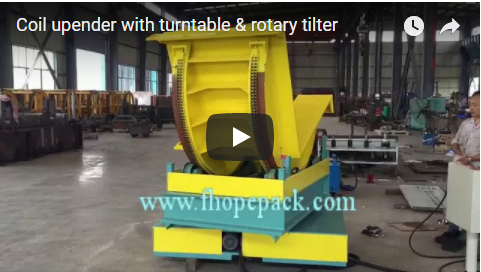
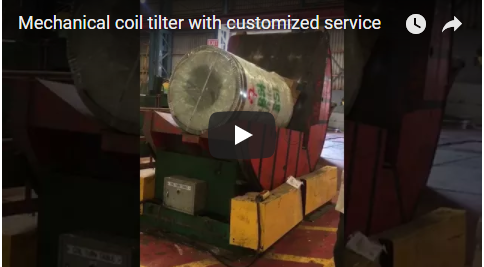
A tilter usually sits between machines: it takes a coil from the line standing up and presents it lying down for packing or transport. The demonstration shows the empty table completing the motion, which is the core task the next work step depends on. The surrounding line and handling are confirmed per project.
ما تُظهره اللقطات
Our footage shows a hydraulic 90° coil tilter cycling its working table from vertical to horizontal under power. It is a general demonstration, so your coil size, weight and cycle requirements are confirmed with us per project.
تكوين نموذجي
تُدرج الأرقام أدناه حدود التصميم الوظيفي بدلاً من القيم العددية، ويتم تأكيدها لكل مشروع على حدة.
| معامل | النطاق النموذجي، يتم تأكيده لكل مشروع |
|---|---|
| السكتة الدماغية | 90 degree table rotation |
| حامل | اسطوانات هيدروليكية |
| طاولات | طاولة عمل قابلة للتعديل |
| وضع البداية | عمودي |
| الوضع النهائي | أفقي |
| التيار الكهربائي | 380 فولت ثلاثي الأطوار 50 هرتز، أو 220 فولت أحادي الطور للآلات الخفيفة، يتم اختيارها حسب المشروع |
قائمة التحقق من الاختيار
| سؤال | تأكيد لكل مشروع |
|---|---|
| نطاق الحمل | القطر الخارجي للملف، العرض، الوزن |
| طاولات | platform size, tilt capacity |
| حامل | hydraulic unit, power |
| دورة | tilt time, hold at level |
| السيطرة | panel and interlocks |
| التيار الكهربائي | الجهد والطور والتردد في الموقع |
التشغيل والسلامة
Position the coil on the vertical table, then start the cycle from the control so the table tips down under power. Keep clear of the table path and the base while the tilter runs, with emergency stops at the operator position.
Routine checks cover the hydraulic unit, cylinders, guide rails and the table condition, per the machine manual. Confirm the load against the table capacity before each run.
أسئلة وأجوبة هندسية
Q: What does this machine do? A: It tilts a working table 90 degrees, from vertical to horizontal, under hydraulic power.
Q: Why tilt a coil at all? A: To turn a coil from its standing position onto its side for packing or transport.
Q: Is the motion powered? A: Yes, hydraulic cylinders drive the rotation; no manual lifting is needed.
Q: What does it suit? A: Coils and heavy round products that need a safe 90 degree re‑orient.
Q: What does the footage prove? A: An empty table completing a full 90 degree tilt in one continuous demonstration.
الخطوة التالية
- أرسل لنا بريدًا إلكترونيًا على info@fhopepack.com مع ذكر حجم ووزن اللفائف.
- We send a coil tilter proposal and a layout drawing within 48 hours.
- We arrange a site survey to confirm table size and cycle requirements.
القراءة ذات الصلة
- أداة قلب الملفات وإمالتها
- آلات تعبئة اللفائف
- رافعة الملفات الهيدروليكية
- خطوط إنتاج آلات التعبئة والتغليف من FHOPE
المصادر والمعايير
- ISO 12100:2010 سلامة الآلات، المبادئ العامة للتصميم وتقييم المخاطر
- EN 415-10:2014 سلامة آلات التعبئة والتغليف، المتطلبات العامة
- EN ISO 13849-1:2023 سلامة الآلات، الأجزاء المتعلقة بالسلامة في أنظمة التحكم
FHOPE hydraulic 90° coil tilter demonstration video. Reviewed as a general demonstration; coil size, weight and cycle confirmed per project.
آخر مراجعة: 11-10-2026